Best AI Text-to-SQL Agents in 2026 (And How to Query Your Database Without Writing SQL)
Most people who need an answer from a database don't want to learn SQL. They want the answer.
That gap is exactly what text-to-SQL agents were built to close: type a plain-English question, get a safe, correct query back, without pinging a data team or waiting for a dashboard update. We build AI agents for a living at SketricGen, including a no-code agent that does exactly this, so this roundup is written from inside the problem, not from a marketing brief.
This is not a "10 tools, pick one" list. It's a segment-first guide: which tool fits a non-technical operator, which fits a developer wiring an agent to a database, and which fits an enterprise team that needs a governed semantic layer. It also covers the part most roundups skip: where these agents still get things wrong, and what to check before you point one at a production database.
Key Points
- A text-to-SQL agent turns a plain-English question into a SQL query, usually through an MCP (Model Context Protocol) connection to your database.
- We compare 7 real 2026 options: a no-code database analyst agent you build in SketricGen, Vanna.ai, DBHub, AskYourDatabase, JetBrains DataGrip AI Assistant, Querio, and Snowflake Cortex Analyst.
- The biggest risk isn't a bad demo. It's a query that runs without error and returns the wrong answer.
- Non-technical operators, developers, and enterprise data teams need different tools, not the same one.
- See the decision table further down if you already know your segment.
At a Glance
| Tool | Best for | Setup | Governance model | Pricing signal |
|---|---|---|---|---|
| SketricGen (build your own database analyst) | Non-technical operators, no-code teams | No-code, MCP-based | Read-only, scoped tables | Included in SketricGen plans |
| Vanna.ai | Teams wanting an agent framework they can extend | Python/API, agent-based | Row-level security | Cloud Pro from ~$50/user/month |
| DBHub | Developers connecting AI clients to a database | Config file, MCP server | Configurable per connection | Free, open-source |
| AskYourDatabase | Non-technical teams with a large production DB | Desktop app or chatbot embed | SOC 2 / ISO 27001, on-prem option | Paid, tiered (100+ companies reported) |
| JetBrains DataGrip AI Assistant | Developers already living in DataGrip | IDE plugin | Developer-controlled, local | Requires JetBrains AI Service license |
| Querio | Data teams needing a shared semantic layer | Connect + define context layer | SOC 2 Type II, RBAC | Flat-rate, from $14,000/year |
| Snowflake Cortex Analyst | Enterprises already on Snowflake | Semantic view setup | Snowflake's native governance | Snowflake consumption-based |
What a Text-to-SQL Agent Actually Does
A text-to-SQL agent sits between a person and a database. You ask a question in plain English. The agent reads the schema, writes a SQL query, runs it, and returns the answer.
That's different from a general chatbot. A chatbot answers from what it already knows. A text-to-SQL agent has to understand your actual tables, columns, and relationships before it can answer anything.
Most 2026 tools connect through MCP, a standard that gives an agent scoped, permissioned access to a tool like a database instead of raw credentials. We've covered how MCP servers give AI agents scoped, safe access to your tools in more depth if you want the mechanics. If a database agent is one piece of a bigger setup, it's also worth understanding what an AI workflow builder actually automates around it.
Pro tip: Before you connect any text-to-SQL agent to a real database, confirm it defaults to read-only access. Write access should be a deliberate opt-in, not the default.
The Real Bottleneck These Agents Are Trying to Fix
The problem isn't that SQL is hard. It's that most people who need data don't have SQL access, or don't have time to use it well.
Data teams describe this as becoming a "human API": every question, however small, routes through one team that has to context-switch constantly to answer it. One practitioner described spending most of their working hours on data-model mechanics and report automation instead of the actual analysis they were hired for.
Data engineers themselves generally agree ad hoc requests aren't going away. The more useful framing, per a roundup of data engineer perspectives, is to let people explore data directly, then move recurring questions into tested, repeatable pipelines instead of banning ad hoc access outright.
What practitioners are saying: Several data engineers converge on the same fix: let stakeholders explore data themselves first, then formalize the recurring questions into pipelines. Self-serve tools are how that "explore first" step happens without an analyst sitting in the loop for every question.
This is the actual case for a text-to-SQL agent: not novelty, but time. Fewer tickets, faster answers, and a data team that spends its time on the questions that need real judgment.

Why Accuracy and Governance Matter More Than the Demo
Every text-to-SQL demo looks good. Production is where they get tested.
Recent research into production text-to-SQL systems found that schema misinterpretation, not language understanding, is the leading cause of query failures once schemas get large or undocumented, per a 2026 paper on self-healing text-to-SQL pipelines. The model doesn't misunderstand English. It misunderstands your tables.
That failure mode is concrete, not theoretical. In one public GitHub discussion about a text-to-SQL implementation, a builder reported queries that ran without error, on multi-table joins, but returned results that were quietly wrong. No error message, no warning. Just a wrong number that looked plausible.
Mistake I've seen: Teams check whether the query runs, not whether the join logic is correct. A query with no error can still return the wrong answer. Always spot-check a new agent against a query you already know the right answer to.
This is exactly why the governance model matters as much as the feature list. Before adopting any tool in this roundup, check three things: does it default to read-only, can you scope which tables and columns it can see, and does it log every query it runs. Skip any tool that can't answer all three clearly. These are the same failure modes we've flagged in why enterprise AI agent deployments fail in 2026: the risk is rarely the model itself, it's the missing guardrail around it.
Decision rule: If a vendor can't tell you, in one sentence, what happens when the agent gets it wrong, don't connect it to your production database yet.
Not every question needs an agent, either. A skeptical, technical take on AI-agent framing is a useful gut check: sometimes a direct, well-written query is faster and more reliable than a multi-step agent. Text-to-SQL agents are for people who don't have that query already written, not a replacement for one that works.
The 7 Best AI Text-to-SQL Agents in 2026
1. SketricGen (build your own database analyst agent)

With SketricGen you can build your own AI database analyst with no code: connect a Supabase or Postgres database and answer plain-English questions through a governed, read-only MCP agent (list_tables, execute_sql, capped rows, no destructive operations by default).
Best for: non-technical operators and founders who want self-serve analytics without touching infrastructure. Not for: teams that need to write custom SQL logic or connect to databases outside Supabase/Postgres today. Differentiator: governance is built in, not bolted on. You set read-only scope and row limits when you build the agent, so the guardrails are part of the design rather than something a non-technical user has to remember to configure. Build it: start from the SketricGen agent library.
2. Vanna.ai
Vanna went through a full rewrite in late 2025 (Vanna 2.0), moving from a SQL-generation library into a production agent framework with row-level security and support for current models like Claude 4.5 and GPT-5, per Vanna's open-source repository.
Best for: technical teams that want an extensible agent framework they can customize. Not for: non-technical users who want a finished, no-setup product. Pricing signal: Cloud Pro plans start around $50/user/month; enterprise pricing is custom.
3. DBHub

DBHub is a free, open-source, zero-dependency MCP server that connects Claude, Cursor, VS Code, and other MCP clients to Postgres, MySQL, MariaDB, SQL Server, or SQLite, per DBHub's GitHub repository (3,000+ stars as of 2026).
Best for: developers who already use an MCP-compatible client and want to wire it directly to a database. Not for: non-technical users. There's no chat interface. It's infrastructure, not a product. Differentiator: it's a connector, not an application, which makes it a natural companion to whatever agent you're already running.
4. AskYourDatabase

AskYourDatabase is built specifically for large production databases and non-technical teams, offering both a desktop app and an embeddable chatbot, per AskYourDatabase's product site.
Best for: non-technical teams with an existing, large SQL database and a preference for a dedicated desktop tool. Not for: teams already standardized on Supabase and an MCP-native stack; the desktop-first model is a different setup path. Differentiator: SOC 2 and ISO 27001 compliance plus an on-premise option, which matters for regulated teams.
5. JetBrains DataGrip AI Assistant
DataGrip's AI Assistant lets developers write, explain, and fix SQL using natural-language prompts inside the IDE they already use, per JetBrains' official documentation.
Best for: developers who live in DataGrip and want AI assistance without leaving their editor. Not for: non-technical business users. This tool assumes SQL literacy; it accelerates writing queries, it doesn't remove the need to understand them. Note: requires a separate JetBrains AI Service license and explicit opt-in.
6. Querio

Querio pairs natural-language querying with a shared "context layer" where a data team defines business rules, join logic, and metric definitions once, so every question resolves consistently, at a flat rate starting at $14,000/year, per Querio's own pricing breakdown.
Best for: mid-size to enterprise data teams that need consistent metric definitions across many question-askers. Not for: small teams or solo founders; the pricing and setup assume a real data team already exists. Differentiator: SOC 2 Type II compliance and role-based access controls built for governed, multi-user analytics.
7. Snowflake Cortex Analyst
Cortex Analyst uses Snowflake's semantic views, metadata, synonyms, and verified examples to reach roughly 85-90% accuracy on natural-language queries, according to Snowflake's own documentation.
Best for: enterprises already running their warehouse on Snowflake. Not for: anyone not already on Snowflake; it's not portable to other databases. Differentiator: accuracy is grounded in a real semantic model, not just schema introspection, which is why the reported accuracy is higher than generic schema-only approaches.
How to Choose (By Who's Asking)
| Who's asking | Best-fit tool(s) |
|---|---|
| Non-technical operator, no data team | Build your own in SketricGen, or AskYourDatabase |
| Developer wiring an agent to a DB | DBHub or JetBrains DataGrip AI Assistant |
| Data team needing shared metric definitions | Querio |
| Enterprise already on Snowflake | Snowflake Cortex Analyst |
| Technical team building a custom agent | Vanna.ai |
The fastest way to pick wrong is to choose by feature count instead of by who's actually going to type the question.

Author Take
The teams that get the most out of a text-to-SQL agent aren't the ones with the fanciest setup. They're the ones who scope access tightly first, then expand it as trust builds. Start read-only, start with one or two tables, and let the agent earn broader access over time. That's the same rollout discipline we use for any AI agent we ship, not just database ones.
Next Steps
- Identify which segment you're in: non-technical operator, developer, or enterprise data team.
- Check governance defaults on your shortlist: read-only access, table/column scoping, and query logging.
- Start with one connected database and a small set of questions before expanding scope.
- If you're a non-technical team on Supabase or Postgres, build a read-only database analyst agent with no code and point it at a single schema first.
Related Reads
- How MCP Servers Give AI Agents Safe, Scoped Access
- How to Connect an MCP Server to an AI Agent
- What Is an AI Workflow Builder?
- Why Enterprise AI Agent Deployments Fail in 2026
FAQs
A text-to-SQL agent converts a plain-English question into a SQL query, runs it against a real database, and returns the answer. Most current tools connect through MCP for scoped, permissioned database access rather than raw credentials.
Yes. NL2SQL (natural language to SQL) and text-to-SQL describe the same underlying task: turning a natural-language question into a working SQL query. The terms are used interchangeably across research and product documentation.
Yes, if the tool defaults to read-only access, scopes which tables and columns it can see, and logs every query. Self-serve setups built for this — a read-only database agent you build in SketricGen, or a tool like AskYourDatabase — treat these as defaults rather than optional settings.
Accuracy depends heavily on schema clarity and governance setup. Research on production systems found schema misinterpretation, not language understanding, is the leading cause of incorrect queries. Semantic-layer approaches like Snowflake Cortex Analyst report 85-90% accuracy; generic schema-only agents can be lower, especially on complex joins.
A chatbot answers from what it already knows. An MCP database agent reads your actual schema through a scoped connection and generates a query specific to your tables. DBHub and a database agent you build in SketricGen are both MCP database agents; a general chatbot is not.
Yes. LangChain and LangGraph both support building custom text-to-SQL agents, and this is a common approach for developer teams that want full control over the pipeline. It requires more setup and ongoing maintenance than a managed tool, so weigh that against your team's bandwidth before building from scratch.
Yes, for judgment calls, data modeling, and anything that needs real analysis. A text-to-SQL agent removes the bottleneck on simple, repeatable questions so your data team can spend time on the questions that actually need a person.
Sources
- 4 Senior Data Engineers Answer 10 Top Reddit Questions (MotherDuck)
- SQL Query Engine: A Self-Healing LLM Pipeline for Natural Language to PostgreSQL Translation (arXiv)
- Need help in text2sql, GitHub Discussion (run-llama/llama_index)
- This AI Agent Should Have Been a SQL Query (Gunnar Morling)
- Vanna open-source repository (GitHub)
- DBHub, GitHub (bytebase/dbhub)
- AskYourDatabase
- AI Assistant in DataGrip (JetBrains Documentation)
- Querio Pricing: No More Enterprise-Only Pricing
- Cortex Analyst (Snowflake Documentation)
Related blogs
View more
9 Best AI Marketing Agents, Tested (2026)
comparisons
Agentic Marketing vs. Marketing Automation: A Decision Framework
comparisons
AI Executive Assistant vs. AI Chief of Staff: The Difference That Actually Matters
comparisons
AI Email Assistant: Why Drafting Isn't the Problem (and What Actually Fixes Inbox Overload)
comparisons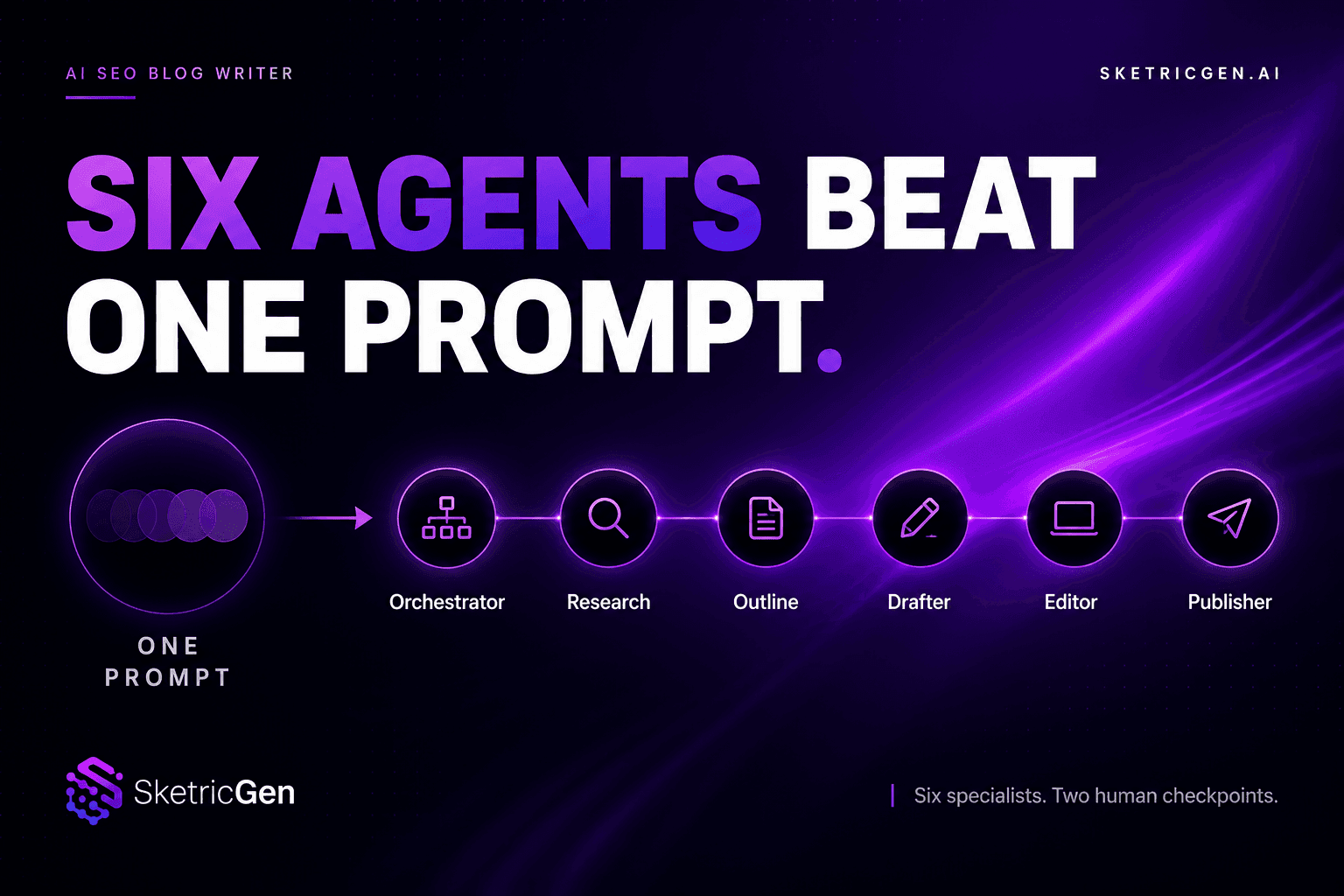
AI SEO Blog Writer: Six Agents Beat One Prompt
comparisons