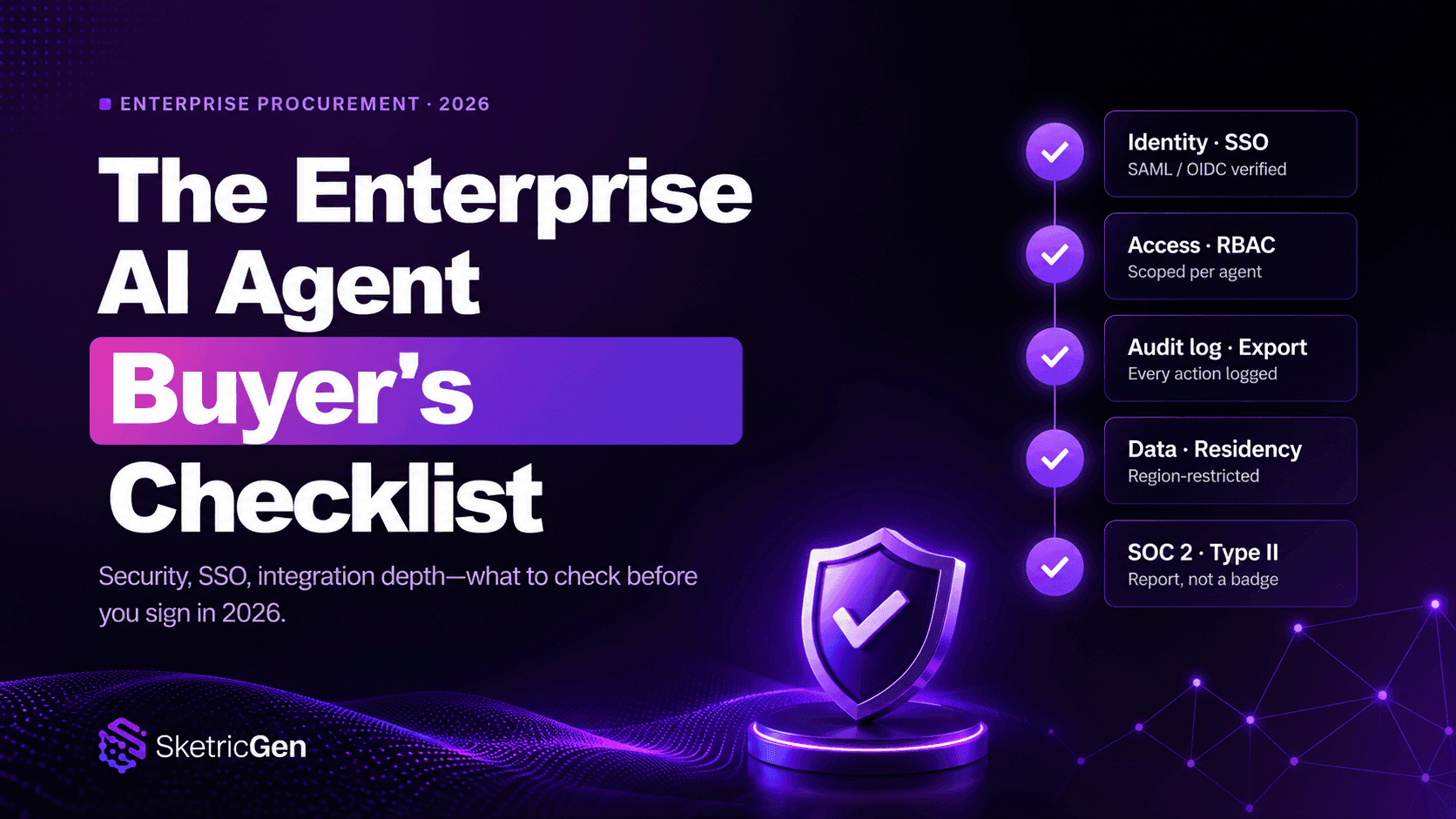
Best AI Shopping Assistant Tools for Shopify Stores in 2026
Compared against each tool's own published pricing pages and setup documentation, plus Reddit- and Quora-sourced merchant complaints, as of July 2026.
If you're comparing AI tools for your Shopify store right now, you've probably noticed something. Every listicle ranks the same six features and calls a different tool "the best."
None of them answer the two questions that actually matter: how long it takes to go live, and what your bill looks like once volume triples. This guide answers both, tool by tool, with real pricing pages linked so you can check the math yourself.
This is written for a Shopify merchant at the comparison stage: already sold on adding AI to shopping, discovery, or order-status handling, not sold on any one vendor yet.
Key Points
- An "AI shopping assistant" and an "AI support chatbot" solve different problems. Buying the wrong category is the most common expensive mistake here.
- Shopify's own Inbox and Magic already cover basic order-status and FAQ handling for free. Don't pay for what you already have.
- Per-resolution pricing (Gorgias, Yuma AI) can add several hundred dollars in a busy month. Session-based pricing (Rep AI) can spike the same way during a traffic surge.
gorgias alternativesearches are up 89% month-over-month, and the pricing-surprise problem is a big reason why.- SketricGen, Gorgias, Rep AI, Octane AI, Rebuy Engine, and Yuma AI are compared below with real, sourced pricing at both low and high volume.
What Shopify Inbox/Magic Already Covers (So You Don't Overpay for It)
Shopify Inbox and Magic already handle a chunk of the basics for free: canned responses, simple order-status replies, and light product Q&A.
If your store does under $50,000 a month and your support volume is mostly "where's my order" and basic sizing questions, a paid tool may not earn its keep yet. eesel AI's tested comparison makes the same call, recommending free or low-cost options specifically for stores under that revenue line with straightforward needs.
Decision rule: if you can list your top 10 support questions from memory, and none require live inventory or personalized product data, start with Shopify's native tools before paying for anything.
The tools below earn their cost once you need personalization, proactive selling, or automation Shopify's native features don't do.
AI Shopping Assistant vs. AI Chatbot vs. AEO Tool: Get the Category Right First
"AI shopping assistant" gets used loosely across three genuinely different categories. Buying the wrong one is the most common expensive mistake in this space.
| Category | What it does | **Example ** | **Buy this if... ** |
|---|---|---|---|
| Shopping/discovery assistant | Recommends products, answers pre-purchase questions, drives cart adds | Rep AI, Octane AI, Rebuy Engine | You want to lift conversion and average order value before checkout |
| Support/ticket chatbot | Answers post-purchase questions: orders, returns, shipping | Gorgias, Yuma AI | Your support queue is the bottleneck, not product discovery |
| AEO / AI-visibility tracker | Tracks whether ChatGPT, Perplexity, and other LLMs mention your brand | Profound | You're measuring AI search visibility, not automating your storefront |
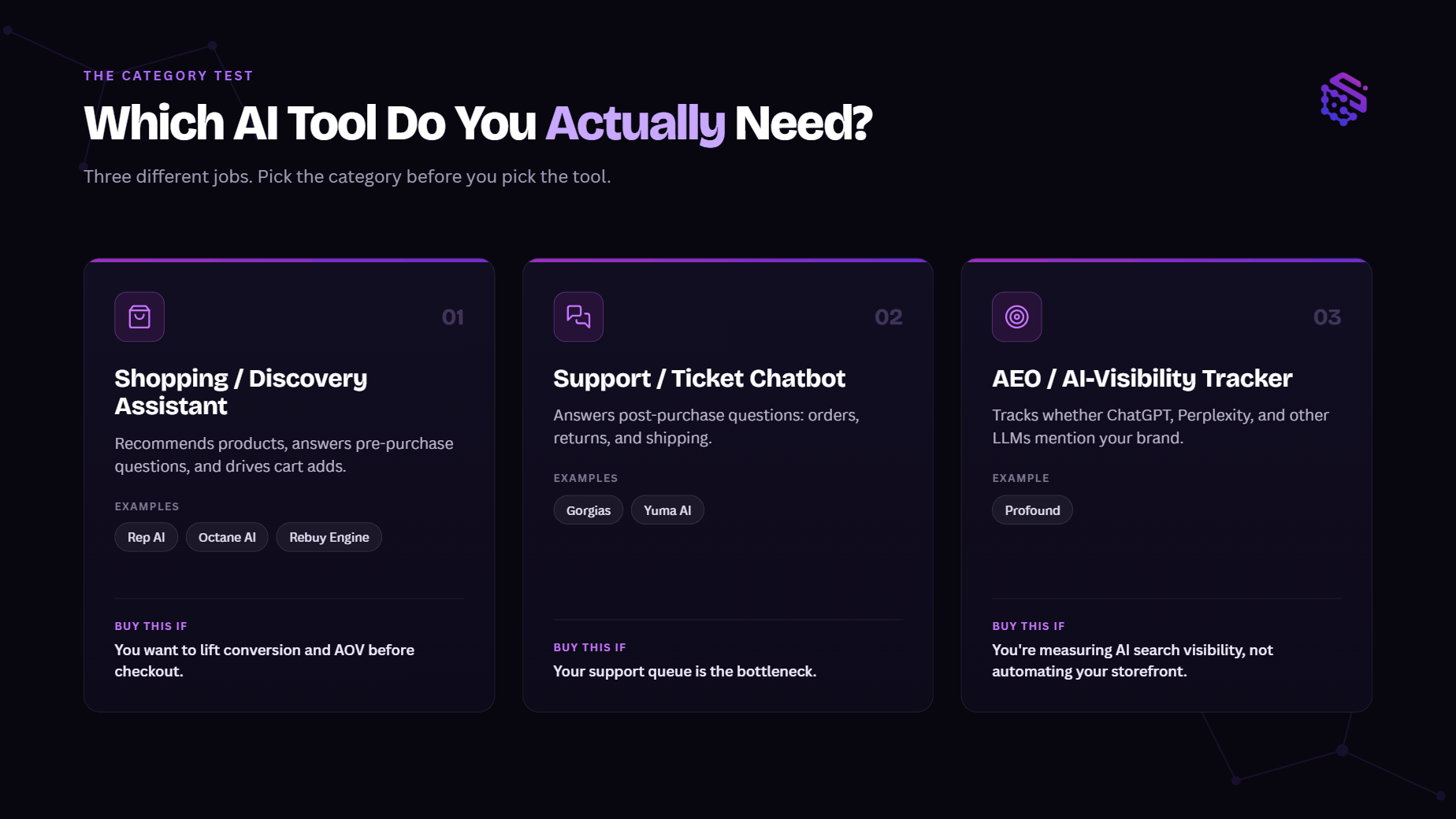
Worth flagging directly: Profound (tryprofound.com) shows up in a lot of searches related to this topic, but it's an AI-visibility tracking platform, not an ecommerce automation tool. Its only Shopify-specific feature tracks AI-crawler traffic on your storefront. It won't run your support queue or your shopping assistant. Full answer in the FAQ below.
No-code builders like SketricGen span the first two categories, since they let you assemble a shopping assistant, a support agent, or both on one platform.
At-a-Glance: 6 AI Shopping Assistant Tools for Shopify Compared
| Tool | Category | Time to live | Starting price | Price at scale | Native to Shopify |
|---|---|---|---|---|---|
| SketricGen | No-code agent builder (shopping + support) | Same-day, no-code setup | Free build flow | Usage-based, scales with agent volume | Built for Shopify + other platforms |
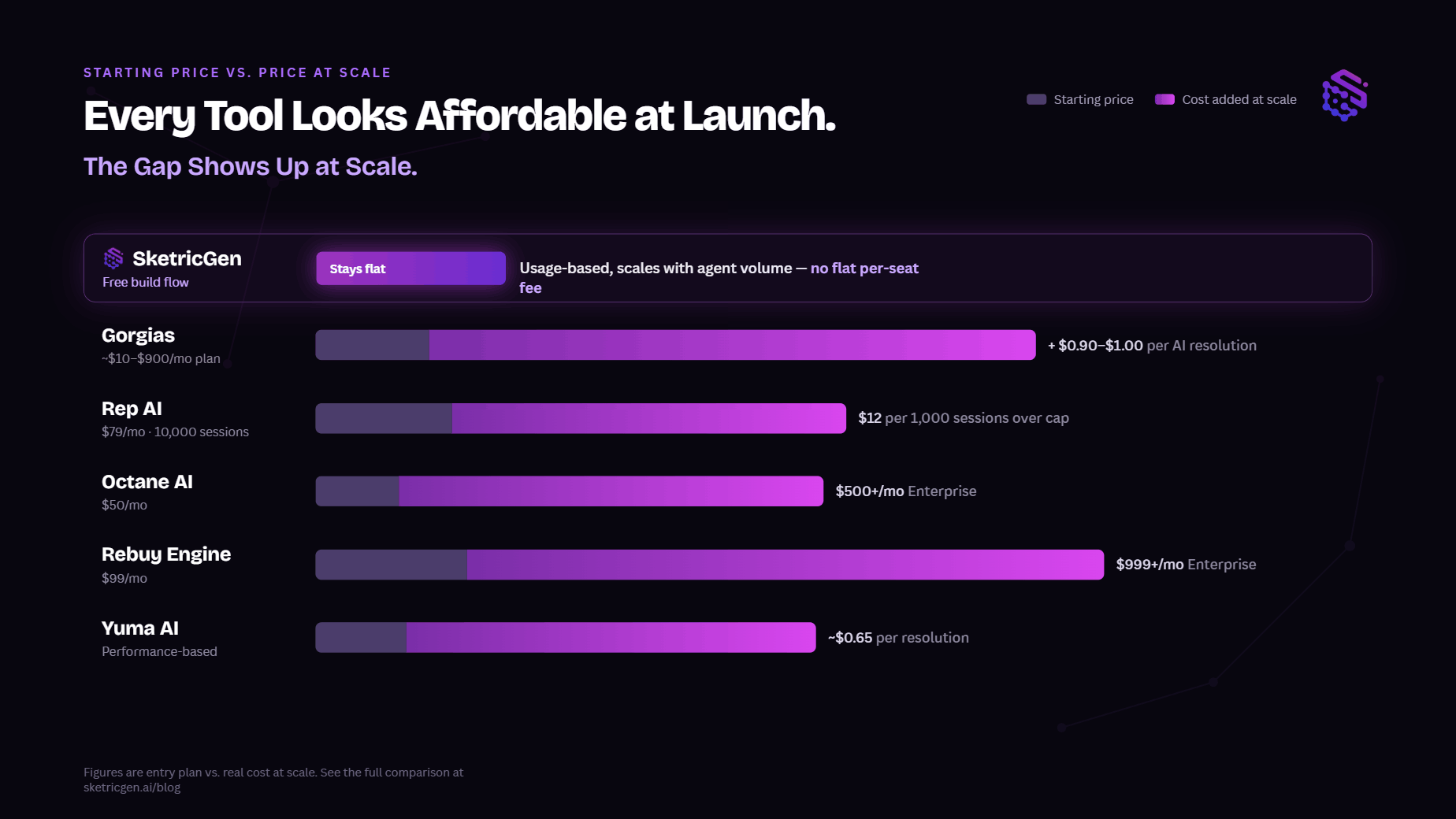
| Gorgias | Support chatbot | Hours to days | ~$10-$900/mo plan + AI add-on | Plan fee + $0.90-$1.00 per AI resolution, on top of the ticket fee | Deep native integration |
| Rep AI | Shopping/discovery assistant | Days | $79/mo (up to 10,000 sessions) | $12 per 1,000 sessions over your cap | Native app |
| Octane AI | Quiz-based discovery + lead capture | Days | $50/mo | $500+/mo (Enterprise, credit-based) | Native app |
| Rebuy Engine | Cart/post-purchase upsells | Days | $99/mo (up to 1,000 orders) | $999+/mo (Enterprise, order-volume based) | Native app |
| Yuma AI | Support chatbot | Days | Performance-based | ~$0.65 per resolution | Native app |
Pro tip: read the "price at scale" column before the "starting price" column. Every tool here looks affordable at launch. The gap shows up three months later, once resolution or session volume climbs.
The 6 Tools, One at a Time
SketricGen: No-Code Agent Builder (Best for Automation Beyond Just Shopping)
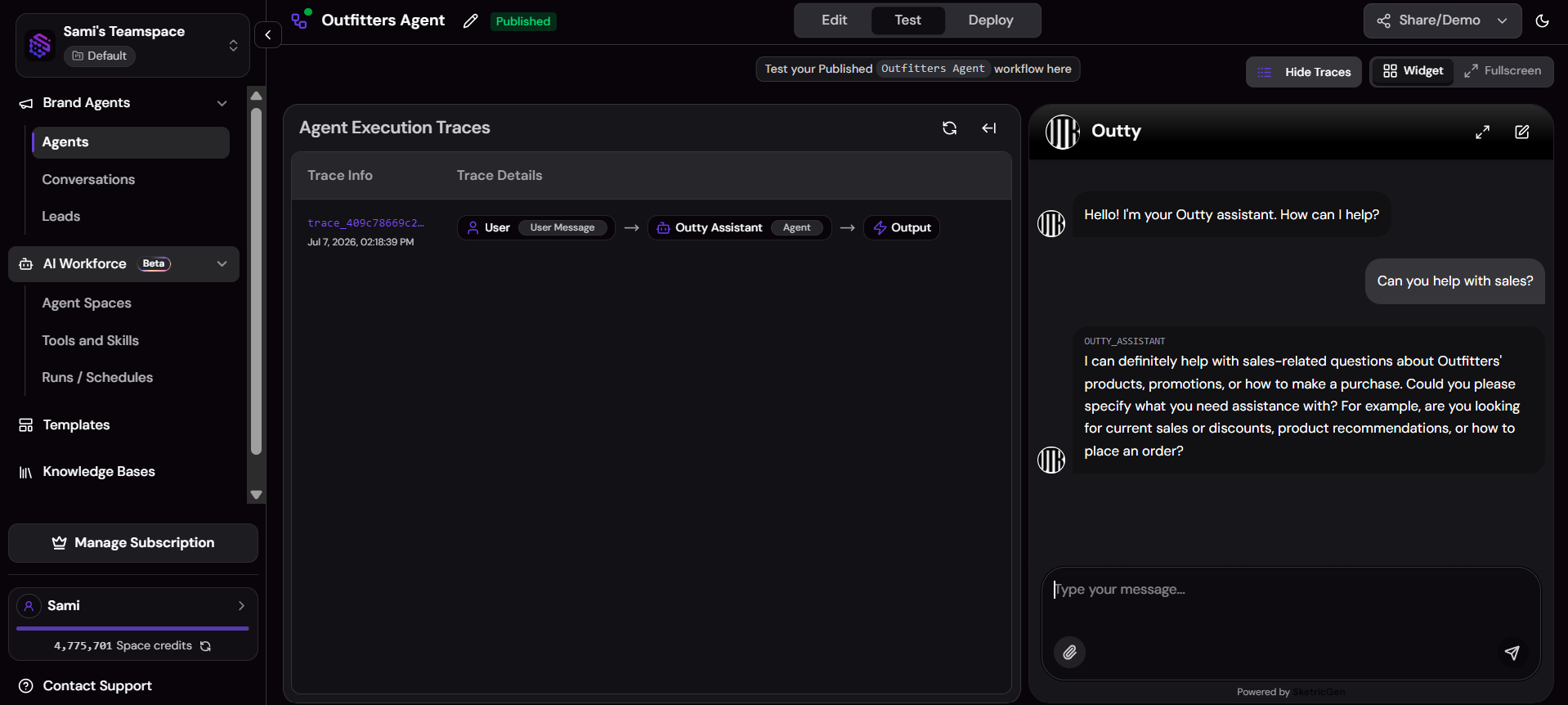
SketricGen lets you build a shopping assistant, a support agent, or a lead-qualification flow from a prompt, without engineering time. It's built for merchants who want one platform instead of stacking a shopping tool, a support tool, and a separate automation tool.
- Setup: Drag-and-Drop Agents, live same-day for most standard flows.
- Pricing: usage-based, scales with what you actually automate, not a flat per-seat fee.
- Honest limitation: as a general-purpose agent builder, a narrow single use case (quiz-based upsells only, say) may launch faster on a purpose-built app first.
Start a free Shopify agent build to see a working flow before comparing further.
Gorgias: Best if You Already Run Support Through It
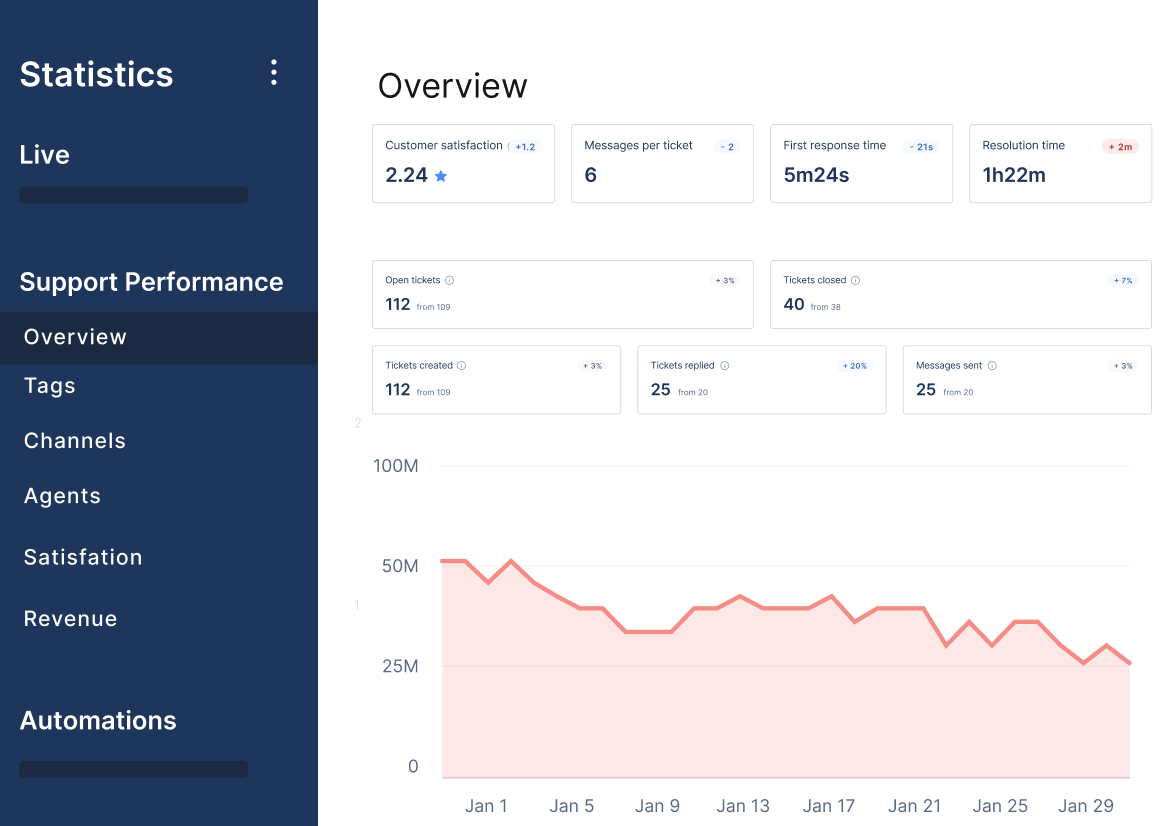
Gorgias is a helpdesk with an AI Agent add-on layered on top. If your support already runs through Gorgias, the AI layer is a natural next step.
- Setup: hours if you're already on Gorgias; days if you're migrating your helpdesk too.
- Pricing: base plans run roughly $10-$900/month depending on ticket volume, per Gorgias's own pricing page. The AI Agent is a separate add-on at $0.90-$1.00 per fully resolved conversation.
- Honest limitation: Gorgias's own pricing breakdown confirms a double-billing structure. When the AI Agent fully resolves a ticket, you're charged both the helpdesk ticket fee and the AI resolution fee for that same ticket.
Mistake I've seen merchants make: budgeting only for the plan tier and forgetting the per-resolution add-on. A Pro-tier store that crosses 1,000 AI resolutions in a busy month can watch that add-on alone add several hundred dollars to the bill.
Rep AI: Best for Proactive, Session-Based Selling
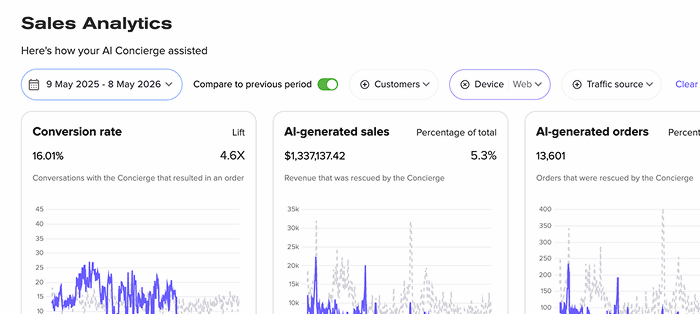
Rep AI positions itself as a proactive sales assistant rather than a reactive support bot. It initiates conversations based on shopper behavior.
- Setup: native Shopify app, live within days.
- Pricing: starts at $79/month for up to 10,000 sessions, per Rep AI's pricing page.
- Honest limitation: pricing is session-based, with overage charges of $12 per 1,000 visitors beyond your plan's cap. A traffic spike, a viral post, a big sale, can push your bill up fast in the same month you need the tool most.
Octane AI: Best for Quiz-Based Product Discovery and Lead Capture
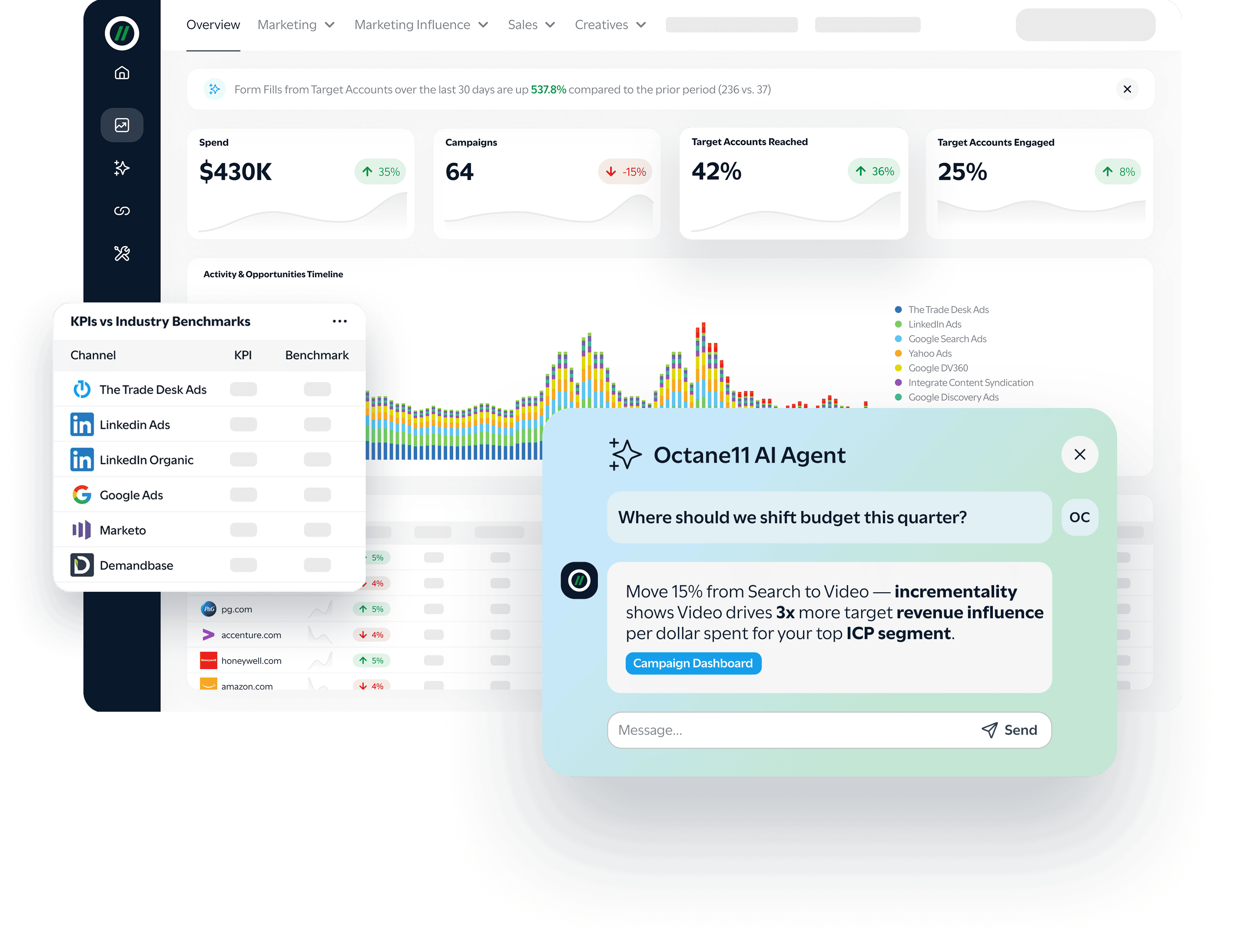
Octane AI's core product is interactive quizzes that recommend products and capture an email or phone number in the process. That doubles as a lead-generation tool, not just a discovery tool.
- Setup: native app, quiz builder, live within days.
- Pricing: starts at $50/month, credit-based, scaling to $500+/month on the Enterprise tier, per Octane AI's pricing page.
- Honest limitation: it's strongest for quiz-driven discovery specifically. It's not a general support chatbot, so pair it with something else if tickets are your real bottleneck.
Rebuy Engine: Best for Cart and Post-Purchase Upsells
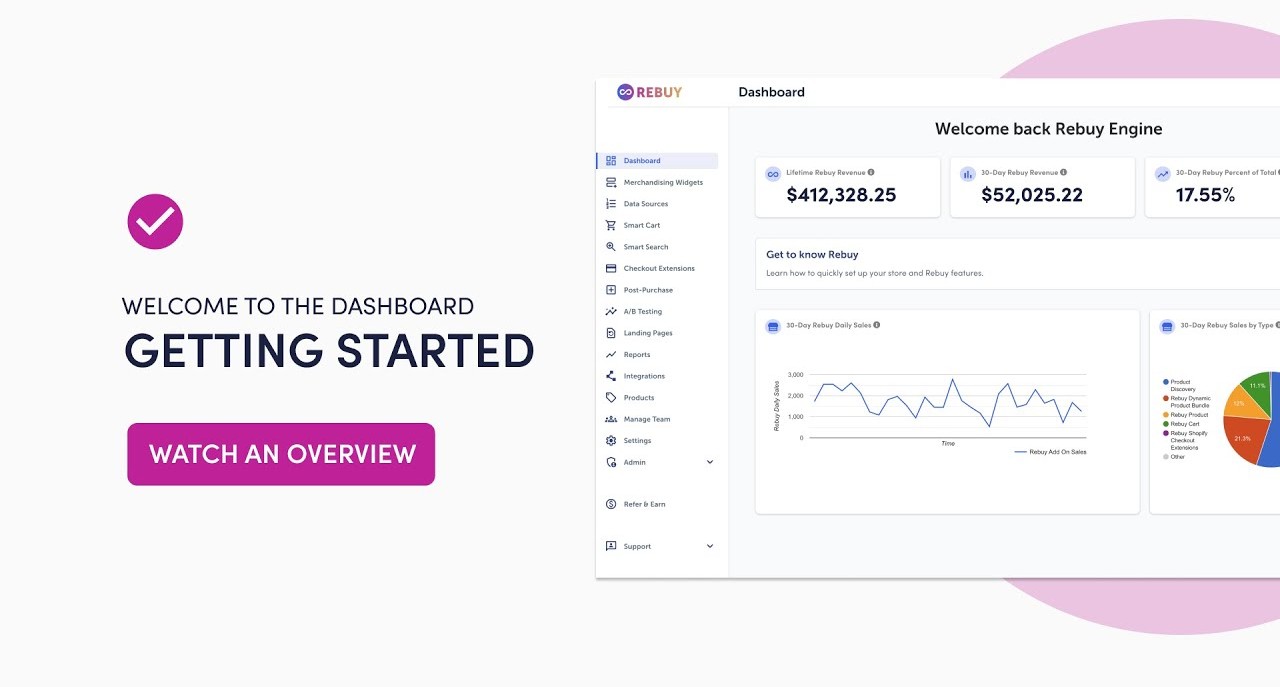
Rebuy focuses on the cart, checkout, and post-purchase moments: smart upsells and cross-sells rather than pre-purchase conversation.
- Setup: native app, days to configure and test upsell logic.
- Pricing: starts at $99/month for up to 1,000 orders, scaling to $999+/month at the Enterprise tier, per Rebuy Engine's pricing page.
- Honest limitation: pricing scales with order volume, not conversation volume, so a high-order, low-AOV store may hit higher tiers faster than expected.
Yuma AI: Best for Performance-Based Pricing (Pay Only for Resolutions)
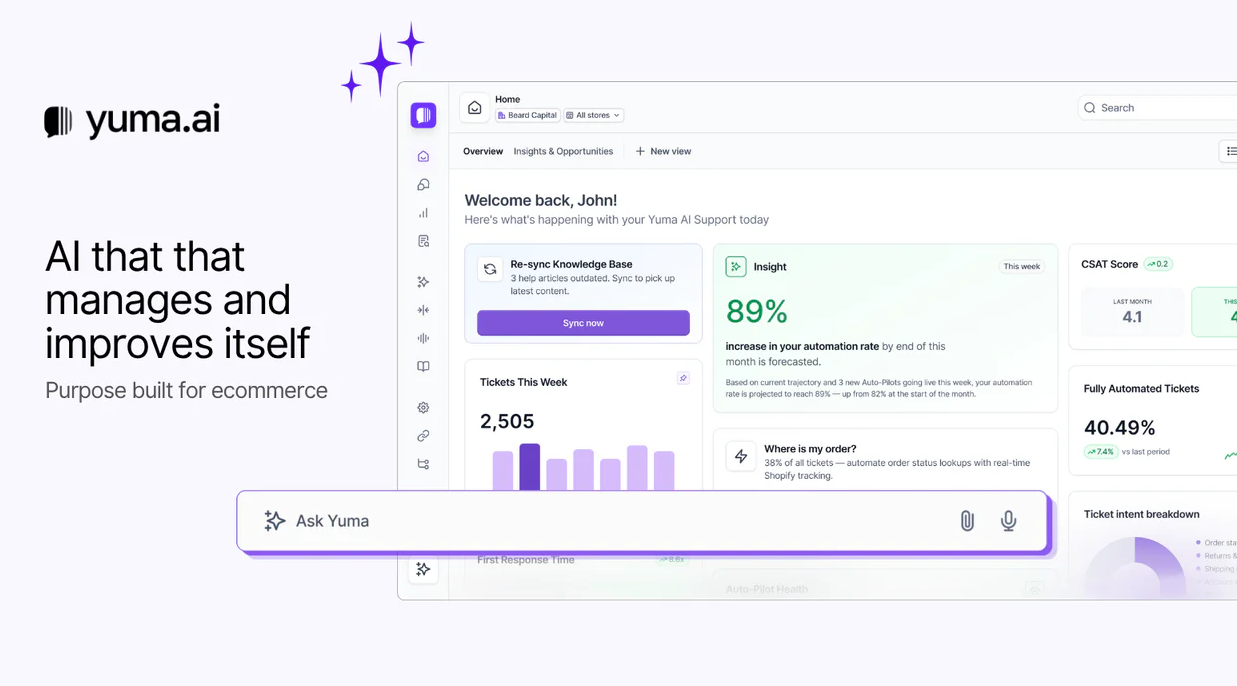
Yuma AI is a support-focused AI agent with a performance-based pricing model. You pay per resolution, not a flat seat fee.
- Setup: native app, days.
- Pricing: approximately $0.65 per resolution, per Yuma AI's pricing listing on G2.
- Honest limitation: performance-based pricing is predictable per ticket, but total cost still scales directly with volume. A high-ticket-count store should model total spend, not just the per-unit rate.
Budget-Friendly Options (If You're Not Ready for a Full Platform)
Not every store needs a $500/month platform on day one. If your ticket or session volume is still low:
- Start with Shopify's native Inbox and Magic, and revisit this list once you outgrow them.
- Look for entry tiers under $100/month, Octane AI at $50/mo, Rebuy at $99/mo, Rep AI at $79/mo, before committing to an Enterprise plan.
- Favor tools with a free trial so you can model your actual resolution or session volume before the bill scales.
- If per-resolution fees stacking on top of a helpdesk seat is your core concern, a usage-based no-code builder like SketricGen skips the double-billing structure entirely, with no flat monthly AI fee to budget around.
What Practitioners Are Saying
Direct Reddit thread access was limited during research for this piece, a known indexing gap for this niche, so this section leans on Quora threads and analyst breakdowns that independently cite real practitioner complaints.
One pricing breakdown from AeroChat found that stores stacking 4-5 overlapping AI tools were spending roughly $1,847/month combined, with no measurable revenue lift to show for it. It cites a Reddit operator's complaint about the cost gap between per-resolution and flat-fee models as the main reason teams hesitate to commit.
On Quora, merchants consistently frame "best chatbot" and "best lead-gen tool" as two separate questions. That lines up with the category table above: shopping-assistant/lead-capture and support-ticket automation are not the same purchase decision.
How to Pick, in Order
Work through these steps in order, not all at once:
- Check your existing helpdesk first. Already on Gorgias? The AI Agent add-on is the lowest-friction next step, if you've budgeted for the per-resolution fee.
- Separate your actual bottleneck. Support tickets piling up, or checkout conversion lagging? Those point to different tools: Yuma AI or Gorgias for tickets, Rep AI, Octane AI, or Rebuy for conversion.
- Model your bill at 5x current volume, not just today's volume, using the pricing pages linked above.
- If you want one platform instead of three, a no-code builder covers more ground per dollar than stacking point solutions.
For a broader evaluation framework beyond pricing, our framework for choosing a Shopify AI agent walks through the fuller decision process.
If support-ticket volume specifically is your bottleneck rather than shopping or discovery, compare ticket-support-specific tools here instead. That comparison goes deeper on the support use case this post only touches on.
Still under the volume where any paid platform makes sense? See the budget-tier comparison for lighter-weight options.
Running on WooCommerce, BigCommerce, or Magento instead of Shopify? Gorgias's own compatibility documentation shows automation support varies significantly by platform. See our platform-by-platform breakdown before assuming this list applies directly to your store.
Ready to see the setup time for yourself instead of taking a pricing page's word for it? Start a free Shopify agent build on SketricGen and compare it against whatever you're using today.
Author Take - Sam
I've watched merchants get sold on a feature demo, sign up, and then open their bill three months later wondering where the extra few hundred dollars came from. That's not a tooling problem. It's a pricing-transparency problem.
Every tool on this list is genuinely capable. What actually separates them isn't the feature list, it's whether you can predict your bill at 10x your current volume before you sign the contract. Read the pricing page before the demo, not after.
FAQs
An AI shopping assistant recommends products, answers pre-purchase questions, and helps shoppers find what they want. That's distinct from a support chatbot, which handles post-purchase tickets. Rep AI, Octane AI, and Rebuy Engine are shopping/discovery-focused; Gorgias and Yuma AI are support-focused.
No. Profound (tryprofound.com) is an AI-visibility and Answer Engine Optimization tracking platform. It measures whether ChatGPT, Perplexity, and other LLMs mention your brand. Its only Shopify-specific feature tracks AI-crawler traffic on your storefront, not shopping automation or support tickets. If you landed here comparing Profound to ecommerce automation tools, this list is the category you actually want.
A chatbot typically answers questions reactively: order status, returns, FAQs. A shopping assistant is often proactive. It recommends products, runs quizzes, or nudges shoppers toward a purchase before they ask a question. Some tools, like SketricGen, can be built to do both.
It depends on the pricing model. Flat-fee and credit-based tools (Octane AI, Rebuy Engine) scale in defined tiers, roughly $50-$999+/month. Per-resolution tools (Gorgias, Yuma AI) scale directly with ticket volume, at $0.65-$1.00 per resolution, which can add several hundred dollars a month once volume climbs. Session-based tools (Rep AI) can spike during traffic surges due to overage fees.
Yes. Flat-fee or credit-based tools (Octane AI, Rebuy Engine) and usage-based no-code builders (SketricGen) avoid the per-resolution billing model entirely. Per-resolution pricing (Gorgias, Yuma AI) is predictable per ticket but scales directly with your support volume, and stacks on top of a separate helpdesk seat fee.
If you're already running support through Gorgias and your ticket volume is moderate, the AI Agent add-on is a reasonable next step. For a small store just starting out, the combined helpdesk-plus-per-resolution cost structure may be more than you need. Shopify's native Inbox, or a lighter tool, is often enough below roughly $50,000/month in revenue.
Shopify Inbox and Magic handle basic canned responses and simple order-status replies for free. A dedicated shopping assistant adds personalized product recommendations, proactive engagement based on browsing behavior, quiz-based discovery, and cart or post-purchase upsell logic, none of which Shopify's native tools cover.
Profound isn't actually a fit for this comparison; it's an AI-visibility tracker, not an ecommerce automation tool (see above). If you want a no-code agent builder that actually automates shopping and support on Shopify, SketricGen covers both use cases on one platform, so you're not stacking multiple point tools with separate bills.
Related blogs
View more
AI Executive Assistant vs. AI Chief of Staff: The Difference That Actually Matters
comparisons
AI Email Assistant: Why Drafting Isn't the Problem (and What Actually Fixes Inbox Overload)
comparisons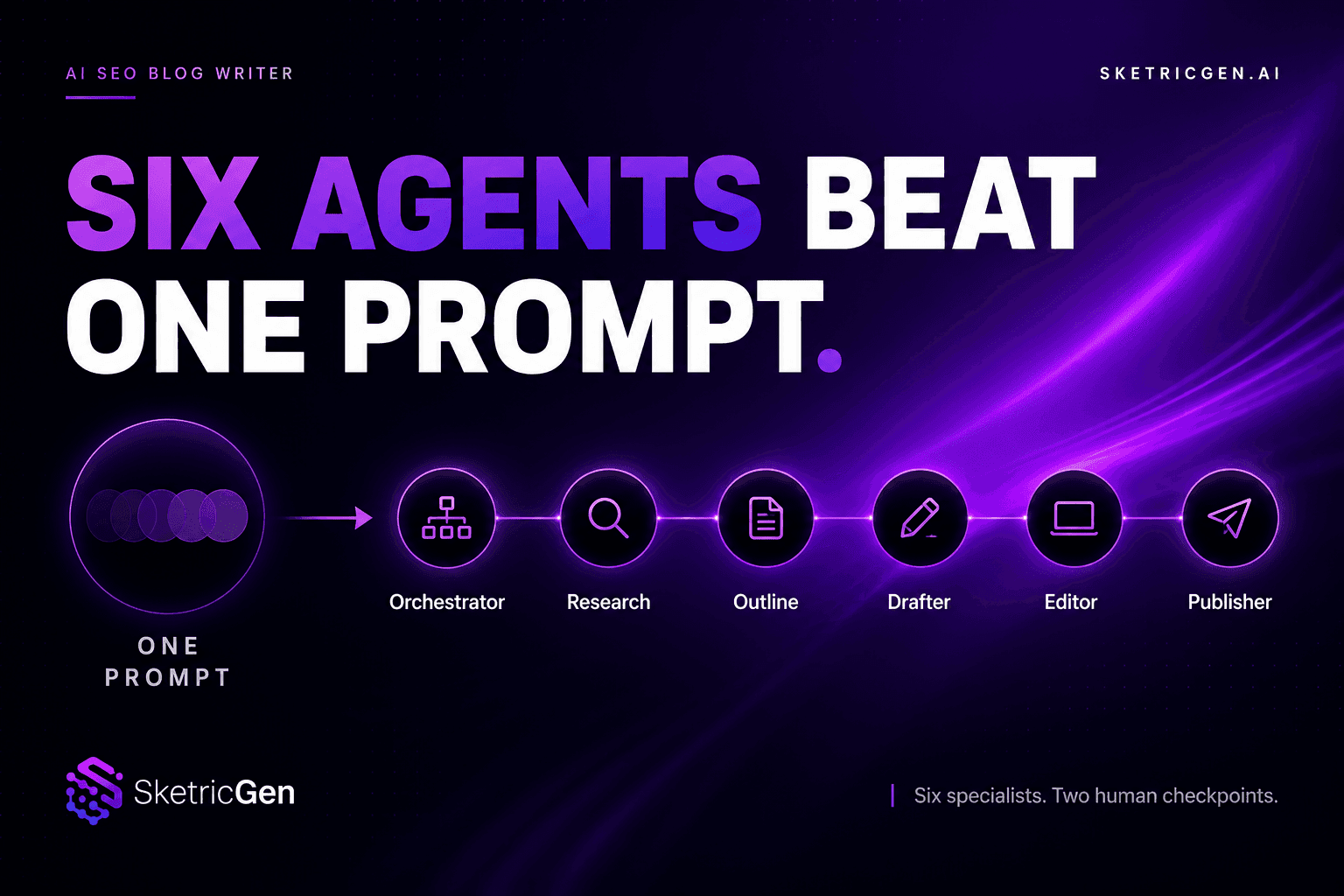
AI SEO Blog Writer: Six Agents Beat One Prompt
comparisons
OpenAI Agent Builder vs. Google Vertex AI Agent Builder vs. No-Code Alternatives (2026)
comparisons
Best AI Agent Builder for Small Business Teams (2026 Buyer's Guide)
comparisons