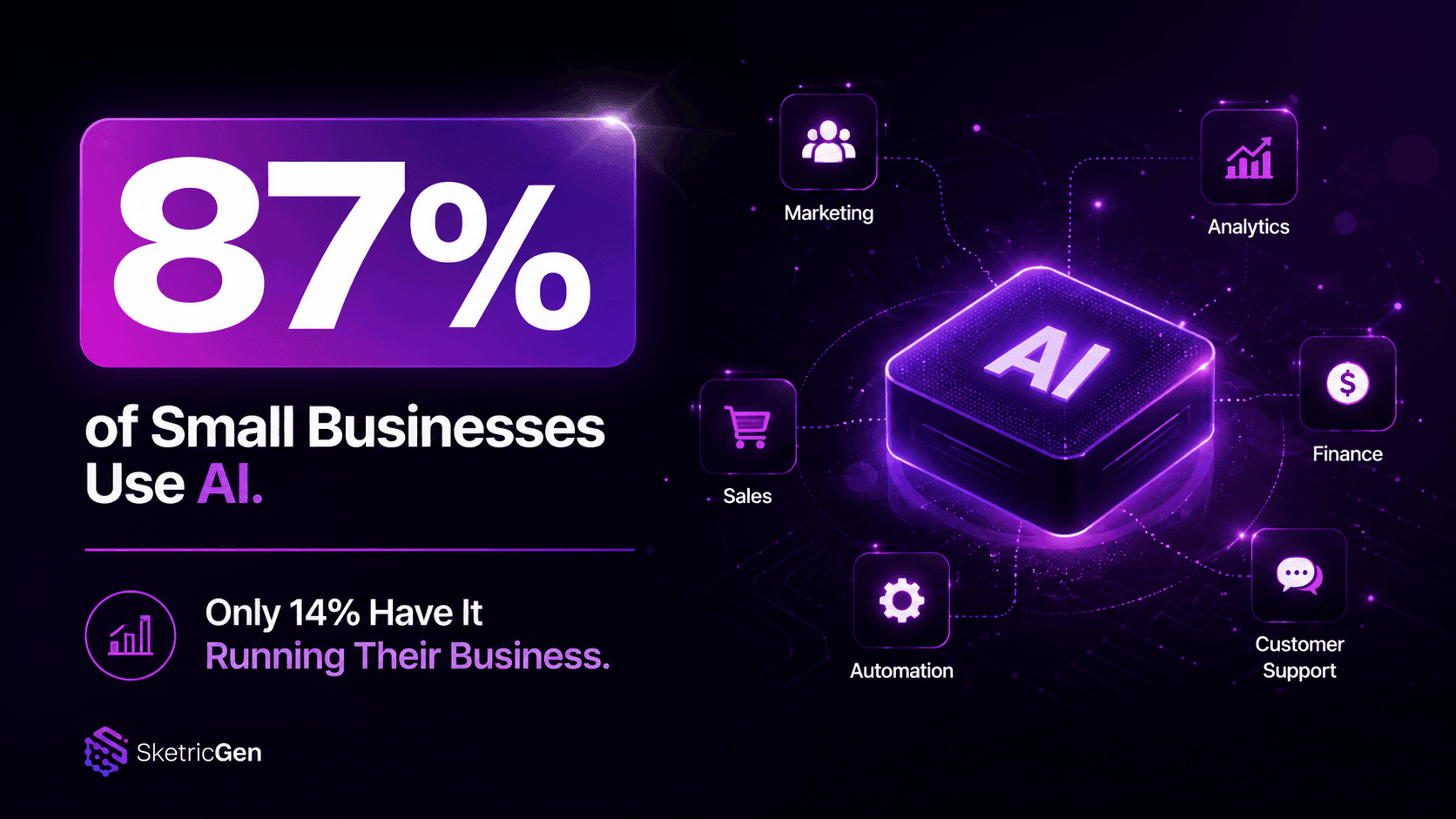
Sam Altman & AI Job Apocalypse, is it real or not?
On May 26, 2026, OpenAI CEO Sam Altman said something that surprised a lot of people who had been taking his earlier warnings seriously.
"I'm delighted to be wrong about this. I thought there would have been more impact on entry-level white-collar jobs being eliminated by now than has actually happened."
This was a direct reversal. In prior years, Altman warned that AI would eliminate large categories of entry-level white-collar work, that "jobs are definitely going to go away," and that entire job categories would be "totally, totally gone." He is now saying he got that wrong.
Moreover, Dario Amodei, Anthropic's CEO emphasized that AI may expand and reshape work in some areas, although he continues to warn that significant labor-market disruption remains possible.
Two of the most prominent AI doomsayers are somewhat reversing course in the same week. Worth reading carefully.
Key Takeaways- Altman's reversal is more about the social and economic story around AI than the underlying technical trajectory.
- BCG's April 2026 analysis says 165 million U.S. jobs were analyzed, with 50 to 55% likely to be reshaped and 10 to 15% potentially eliminated over time.
- Layoffs and task changes are real, but broad unemployment disruption has not yet shown up in the March 2026 labor data.
- The practical response is to redesign workflows around AI, not wait for the labor market to settle on its own.
If you want the implementation layer behind this debate, start with our Multi-Agent AI explainer, then move to what an AI workflow builder does if you're mapping the automation layer inside your team.
Why Altman's reversal matters for the IPO narrative
Both OpenAI and Anthropic are eyeing large IPOs. OpenAI filed IPO paperwork confidentially in May 2026. A calmer narrative around job displacement is significantly better for a public listing than an active panic about automation wiping out the workforce.
That doesn't automatically make the reversal wrong. But earlier in 2026, OpenAI published a policy paper calling for taxes on automated labor and pilots of a 32-hour working week. That paper explicitly assumed significant labor market disruption is coming. It is difficult to read that document and Altman's "delighted to be wrong" interview as coming from the same position.
Altman acknowledged the gap himself: "At the highest level, we've been roughly right on technological predictions and pretty wrong on the social and economic implications."
What does the data say about AI job displacement?
Tech layoffs in 2026 passed 142,000 by late May, already exceeding the 124k logged in all of 2025. Meta, Amazon, Microsoft, and Snap are among the companies cutting at scale. Several cited AI as a driver, with internal memos describing workforce reductions as enabling "the substantial investments we are making" in AI infrastructure. Big Tech collectively is spending $725 billion on AI capex in 2026. Some of that math does require a smaller headcount.

At the same time, Yale Budget Lab reports no meaningful shift in unemployment through the March 2026 CPS releases, including for workers in high AI-exposure roles. These findings depend on the dataset and timeframe examined, so layoffs are real even if broad unemployment disruption has not yet materialized.
A BCG report from April 2026 offers the clearest framing.
| BCG metric | Figure | What it means |
|---|---|---|
| U.S. jobs analyzed | 165 million | Broad labor-market sample used in the report |
| Roles substantially reshaped | 50-55% | Same job title, different task mix over the next 2-3 years |
| Roles fully eliminated | 10-15% | Some jobs disappear over a five-year horizon |
Substantially changed is not the same as eliminated. The rest will be reshaped: same title, different task mix, different expectations for what fills the hours.
Pro tip: The question "will AI take my job?" is less useful than: "Which tasks in my role are already automatable, and am I the one running that automation or the one being replaced by it?" Those are very different positions to be in, and they are not determined by your job title.What practitioners are saying
The ground-level experience matches the BCG framing more than the apocalypse framing.
What practitioners are saying: In 2026 Quora and Reddit threads on AI and white-collar work, the recurring theme is task-level change rather than wholesale displacement. A frequently referenced example: a customer support agent no longer handles every ticket manually. They supervise multiple AI assistants and escalate what the assistants cannot resolve. The role still exists. What fills the hours has completely changed. Workers who adapted early report higher output and in some cases stronger job security. Workers who resisted or were not supported through the shift are the ones being squeezed. The pattern is consistent: adapt the task mix, keep the role. Don't adapt, get exposed.This matches what Anthropic's March 2026 Economic Index report found: Claude usage was still concentrated across a limited slice of tasks, which is another way of saying adoption is still lagging capability. The technology is ahead of reorganization. Most of the labor market has not been rebuilt around it yet.
If you want to see how this shift turns into actual operating changes, the AI agents project management roundup and why businesses are moving to AI workflow platforms show how teams are already reorganizing work.
What this means for your team
Whether the apocalypse arrives turns out to be the wrong question for most operators.
The more useful question: is your team building skill in directing AI, or are they spending hours on tasks that AI already handles competently?
Companies cutting at scale in 2026 are not replacing humans with AI uniformly. They are shifting toward smaller teams that multiply output using AI tools and reducing headcount that does not. That is a different threat model than mass displacement, and it calls for a different response.
Small teams that adopt AI-powered workflows are not replacing their people. They are choosing which tasks get human time and which get automated. Output stays the same or improves; manual drag drops. That is the actual productivity story.
Author note: The 142K layoffs are real people, and I don't want to paper over that. But the right response for most operators is not to wait for the prediction market to settle. It is to audit the recurring workflows on your team and figure out which ones shouldn't require human hours. That gap is where the productivity difference compounds over the next 12 months.
That is exactly where a brand agent changes the equation. A SketricGen brand agent works on your behalf around the clock — handling customer questions, qualifying leads, and routing support — without adding to your headcount. You define how it behaves, what it knows, and where it shows up: your website, WhatsApp, Slack, or anywhere your customers already are. The tasks get handled; the payroll stays flat. That is what it looks like to multiply a small team without hiring your way through a disruption.
The window to adapt is open. The debate over whether the apocalypse is coming is a distraction from a simpler question: are you getting more from your current team than you were six months ago?
Try SketricGen and deploy your first brand agent without writing a line of code. Or start from a template to see what others have already built.
Sources & further reading
- Tech layoffs data (May 2026)
- BCG — "AI will reshape more jobs than it replaces" (April 2026)
- OpenAI / IPO context reporting
- Big Tech AI capex reporting
- Anthropic Economic Index report: Learning curves (March 2026)
- Yale Budget Lab — Tracking the Impact of AI on the Labor Market
FAQs
Both, depending on the role. BCG's April 2026 analysis of 165 million U.S. jobs found that 50 to 55% will be substantially reshaped over the next two to three years. A separate 10 to 15% of roles are projected to be eliminated within five years. The consistent pattern: highly repetitive, rules-based tasks are being automated first. Roles that require judgment, client interaction, or oversight of AI systems are the ones holding.
Altman said on May 26, 2026 that he underestimated the "human part" of work and the importance people place on interacting with others on the job. He acknowledged being "pretty wrong on the social and economic implications" of AI, even while maintaining his technical predictions were roughly accurate. The reversal came days after OpenAI filed IPO paperwork confidentially, which is relevant context given that a calmer jobs narrative is considerably better for a public listing.
Readiness matters more than worry. The teams feeling squeezed in 2026 are largely the ones that did not adapt, where manual tasks kept accumulating while competitors automated them. BCG's analysis specifically identifies a "Divergent Roles" category where junior positions shrink while oversight and senior roles grow. Building AI literacy on your team now is a lower-risk posture than waiting to see where the disruption lands.
Start at the task level. Identify the customer-facing and internal workflows that are repetitive, rule-based, and time-consuming: answering the same questions, qualifying inbound leads, routing support requests, scheduling. A brand agent handles all of that without adding headcount. SketricGen lets you build and deploy one from a plain-English description — no code required. Starting from a template is the fastest way to get a working agent in front of customers before building something custom.
Related blogs
View more
SEO Automation: What You Can Safely Automate (and What Still Needs a Human)
ai trends and research
What Is an AI Marketing Agent? What It Automates, and What It Cannot
ai trends and research
AI-Proof Jobs in 2026: What the Data Actually Shows
ai trends and research
What Is AI Agent Orchestration? A Plain-English Guide (2026)
ai trends and research
What Is an AI Workflow Builder? How to Choose the Right One in 2026
ai trends and research