Microsoft Scout: The AI Agent That Just Changed the Rules
On June 2, 2026, Microsoft announced something that felt more like a product category than a product launch.
Scout is Microsoft's first "Autopilot": an always-on AI agent that runs 24/7 inside Microsoft 365. It manages your Teams chats, Outlook inbox, OneDrive files, SharePoint, and calendar without waiting to be asked. No chat window. No prompt. It just works.
That's the headline. The fine print is where it gets interesting, and where most businesses need to pay attention.
Key Points
- Scout is the first product in a new category Microsoft calls "Autopilots": autonomous AI agents that work continuously without being prompted
- Announced June 2, 2026 at Microsoft Build 2026, built on OpenClaw, Microsoft's open-source agent framework
- Currently invitation-only; broader GA expected Q4 2026 or early 2027
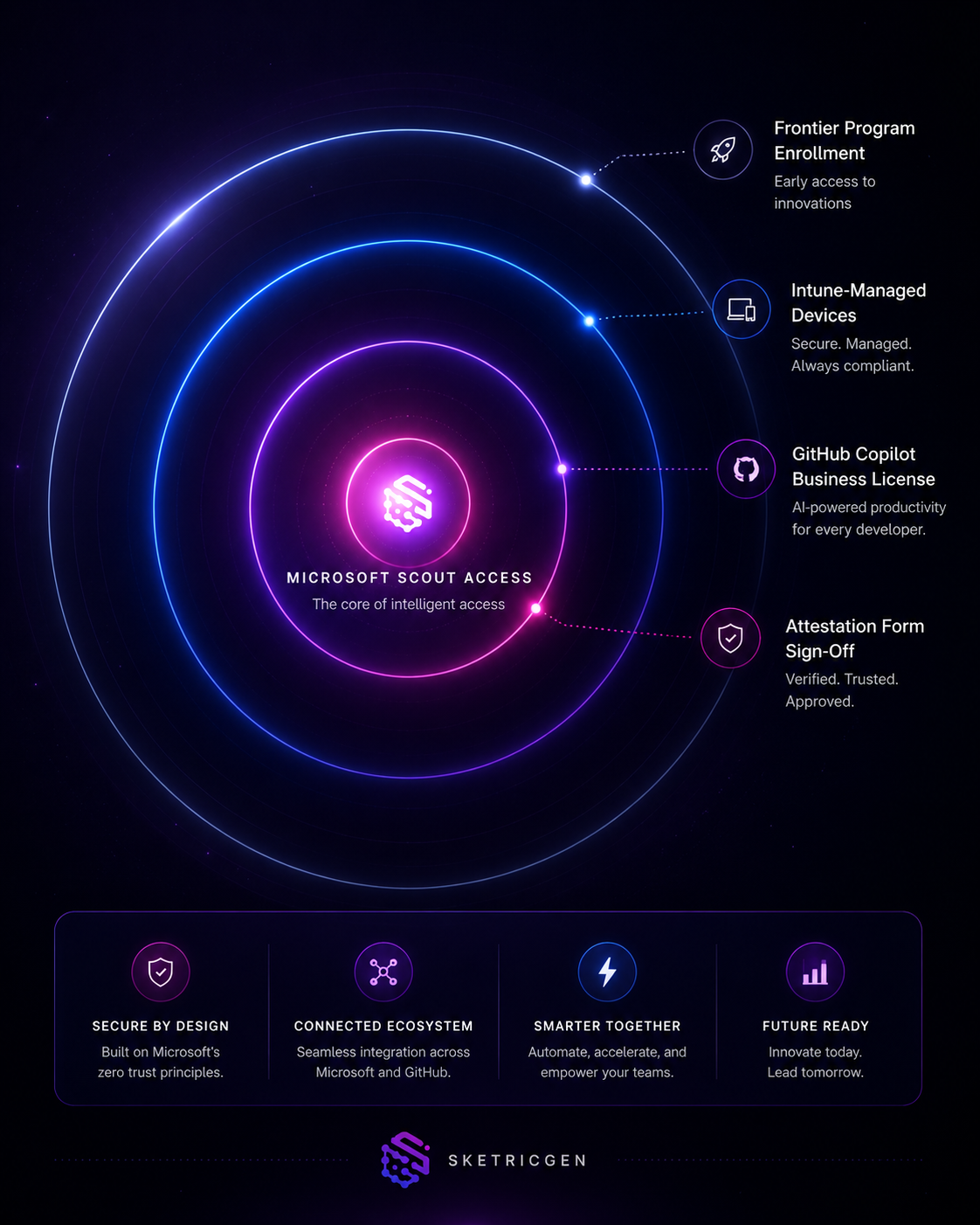
- Requires Frontier enrollment, Intune-managed devices, and a GitHub Copilot Business or Enterprise license just to access it
- Only works inside Microsoft 365: Teams, Outlook, OneDrive, SharePoint, Calendar. Nothing outside
- For businesses not locked into M365: the right response is urgency, not envy. Start building your autonomous agent stack now
| Feature | Microsoft Scout | What Most SMBs Need |
|---|---|---|
| Stack coverage | Microsoft 365 only | Multi-tool: Slack, Notion, HubSpot, Google Workspace, CRM |
| Availability | Invitation-only preview | Available today |
| Setup complexity | Frontier + Intune + GitHub Copilot license required | No-code, low-barrier setup |
| Pricing | Unconfirmed; likely M365 E7 premium tier | Transparent, SMB-accessible |
| Best for | Large enterprises fully inside M365 | SMBs and mixed-stack teams |
What Microsoft Scout Actually Does
Scout monitors your Microsoft 365 environment around the clock and takes action on your behalf, without waiting to be asked.
In practice, it watches your Teams group chats for stalled threads, triages Outlook, coordinates meeting times across time zones, blocks calendar time for upcoming deliverables, and surfaces what needs your attention before you open your laptop.
Unlike Copilot, which responds when you query it, Scout is always running. Microsoft calls it "Work IQ": a continuous model of how you work, who you work with, and what comes next.
Each Scout instance carries its own Microsoft Entra identity and operates under Purview governance controls. Every action Scout takes is attributable to a governed actor, not an anonymous background process. That's the right architecture for enterprise AI agents, and it sets a useful standard.
Scout runs on OpenClaw, an open-source agent framework Microsoft released alongside Scout at Build. OpenClaw handles the agent runtime layer; Scout is the enterprise product built on top of it.
The M365 Lock-In Problem
Here's what the launch materials don't lead with.
To access Scout right now, your organization needs to:
- Enroll in the Microsoft Frontier program (enterprise-only early access)
- Manage all user devices through Microsoft Intune
- Assign each Scout user an active GitHub Copilot Business or Enterprise license
- Complete a formal attestation form before any access is granted
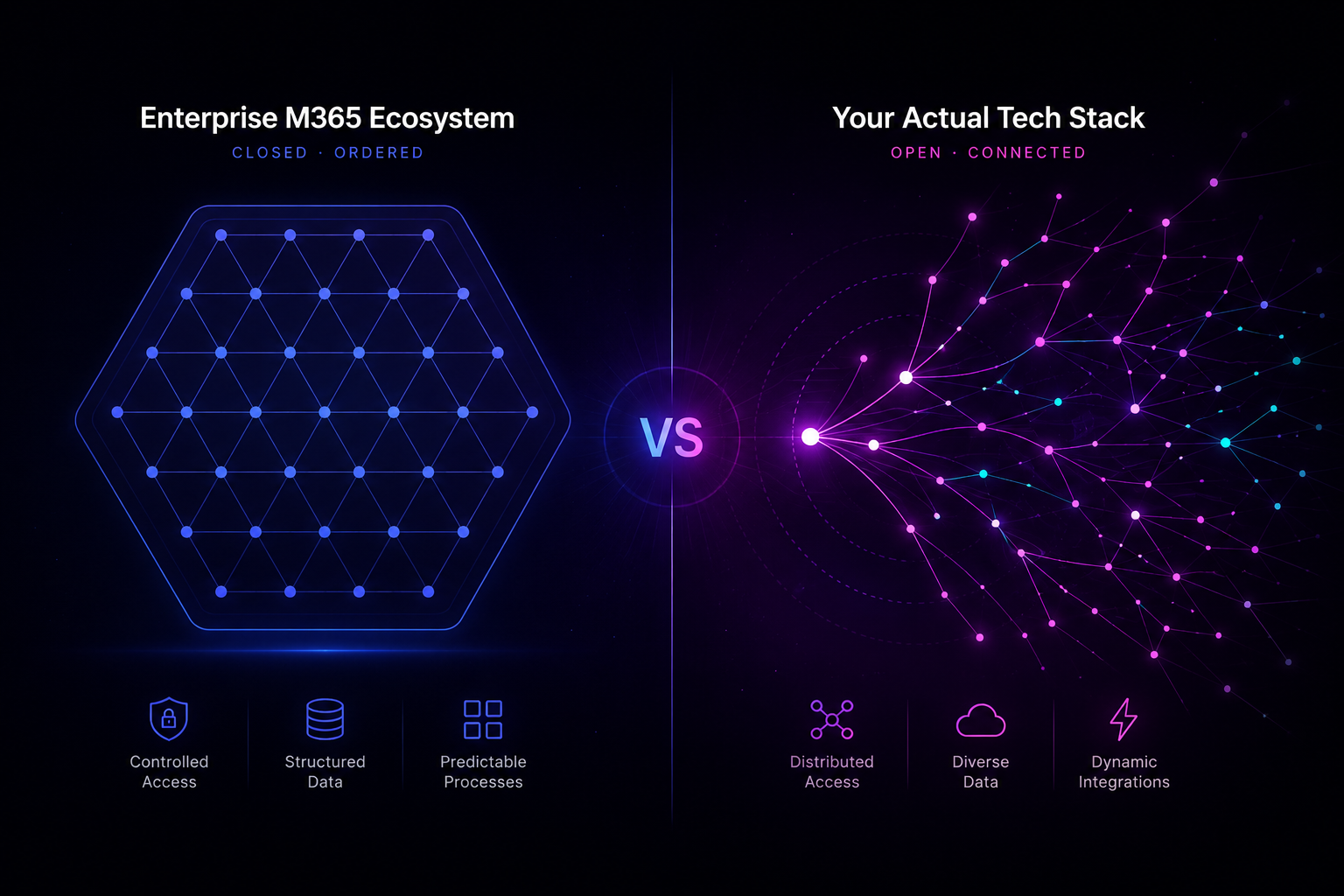
And after all of that, Scout only sees Teams, Outlook, OneDrive, SharePoint, and Windows. If your team works in Slack, tracks projects in Notion, manages customers in HubSpot, or runs email on Google Workspace, Scout has no visibility into any of it.
GA isn't expected until Q4 2026 at the earliest, possibly early 2027. Pricing is unconfirmed. Microsoft has not disclosed whether Scout will be included in existing M365 Copilot subscriptions or billed separately.
If you're evaluating Scout for your team right now: the real question isn't "what can Scout do?" It's "what percentage of our actual work happens inside M365?" If the answer isn't near 100%, Scout won't have the context it needs to be useful.
Why This Announcement Still Matters
Scout's limitations don't make the announcement less significant. They make the signal clearer.
Microsoft doesn't launch product categories casually. The "Autopilot" label is a stake in the ground: autonomous, always-on AI agents are the next layer of business software. Not a feature. Not a research project.
The broader market is already moving. Close to 75% of businesses plan to deploy AI agents by end of 2026, and the autonomous agent market is projected to grow from roughly $10 billion today to $50 billion by 2030. Microsoft's entry accelerates this category. It doesn't create it.
Knowledge workers already spend roughly 25% of their workweek managing email, before accounting for the coordination overhead of scheduling, follow-ups, and task tracking. Scout is Microsoft's bet that autonomous agents can claw that time back. They're probably right.
We covered this shift earlier this year through the lens of workforce change: how SMBs are replacing repetitive work with AI agents. Scout is enterprise confirmation that the direction is correct. The timing question is the only one that remains.
What practitioners are saying: 92% of security professionals express concern about how AI agents access and handle sensitive data. See: Raconteur, 2026. The correct response isn't to avoid autonomous agents. It's essential to demand identity governance before deploying them. Scout's Entra identity model sets the right standard: every action is attributable, every permission is scoped. SMBs evaluating agent platforms should hold vendors to the same bar. For context on what happens when AI is deployed without clear accountability, see our breakdown of the BCG study on AI agents backfiring when misdeployed.
What to Do If You're Not in M365
Scout's launch should be a forcing function, not a spectator event.
If your business runs on a mixed stack (Slack, HubSpot, Google Workspace, Notion, Shopify, or any combination), you won't have access to Scout, even after Q4 GA. But the underlying capability is available now, from platforms built for stack-agnostic deployment.
Three things to look for when evaluating autonomous agent platforms:
Stack flexibility. An agent that only sees one vendor's data isn't an autonomous agent. It's a locked-in add-on. Look for platforms that connect across your actual tools, not just one ecosystem.
Trigger-based, always-on execution. "Always-on" means the agent runs on schedules and responds to events without you initiating it. If you have to open an app to get value, it's a chatbot, not an Autopilot.
Low-barrier setup. Frontier enrollment, Intune management, and GitHub Copilot licensing are enterprise barriers most SMBs can't clear. The right platform for your team should take hours to configure, not months.
SketricGen is built for this use case: autonomous agents that run across your tech stack, not just inside one vendor's ecosystem. The agent template library shows common automation workflows already built out. The AI scheduling assistant guide walks through one of the highest-value quick wins from autonomous agent deployment.
View pricing if you're comparing options.
Author Take - Sam
Scout's Q4 2026 GA target isn't random. Microsoft has a well-documented enterprise sales cycle. Organizations need Frontier enrollment, license assignment, and Intune policy configuration completed well before a hard launch date. That process starts with the preview now.
The risk for SMBs is waiting. Businesses that treat Scout's announcement as a future milestone will be 6 to 12 months behind competitors who start building autonomous agent workflows today. The technology is here. The category is validated. The early-mover window in your industry is shorter than it looks.
Build something now. You don't need Scout to get there.
What to Build Next
Scout proved one thing clearly: always-on AI agents are a shipping product category, not a roadmap item.
You don't have to wait for Q4 GA or navigate Frontier enrollment. SketricGen lets you build autonomous agents across your actual tech stack: customer support, lead qualification, scheduling, and more, without enterprise prerequisites.
Explore agent workflow templates to see common automations already built. Or view pricing to compare options for your team.
The agents working for your business should reflect your tools, not Microsoft's.
FAQs
Microsoft Scout is an always-on autonomous agent that works continuously inside Microsoft 365 without being prompted. Copilot is a conversational AI you query directly: open it, ask a question, get a response. Scout runs in the background 24/7, monitoring your Teams, email, and calendar, and taking action proactively. Think of Copilot as a smart assistant you talk to, and Scout as a coworker who keeps working even when you're not in the room.
Not in any practical sense today. As of June 2026, Scout is available only through an invitation-only preview that requires Frontier program enrollment, Intune-managed devices, and a GitHub Copilot Business or Enterprise license. These are enterprise IT requirements most SMBs don't have in place. GA is expected Q4 2026 or early 2027, with pricing still unconfirmed. See the Microsoft Learn Scout FAQ for current details.
An always-on agent runs continuously. It doesn't wait for you to open an app or type a message. It monitors your connected data (email, chat, calendar, files) and acts autonomously within its defined scope: scheduling meetings, triaging inboxes, flagging stalled decisions, blocking calendar time. You define the permissions; it works inside those boundaries 24/7. Scout is one implementation of this. Other platforms offer the same capability across broader tool sets without the M365 dependency.
No. Microsoft Scout requires M365 plus several additional enterprise licenses on top. But autonomous AI agents exist outside the Microsoft ecosystem. SketricGen lets you build always-on agents that connect to your actual tools (Slack, Google Workspace, Shopify, HubSpot, or any combination) without requiring any Microsoft licensing.
A chatbot responds when you ask it something. An Autopilot is an autonomous agent that acts without being prompted. It monitors, decides, and executes on your behalf around the clock. Microsoft uses "Autopilot" as the category name for Scout. The practical difference: chatbots require your time and attention to generate value; Autopilots generate value while you're focused on other things.
Related blogs
View more
The Claude "CEO" Experiment: What Project Vend Actually Proves About AI Agents
ai agent news
Cisco Gave 90,000 Employees an AI Agent - the Same Month It Cut 4,000 Jobs
ai agent news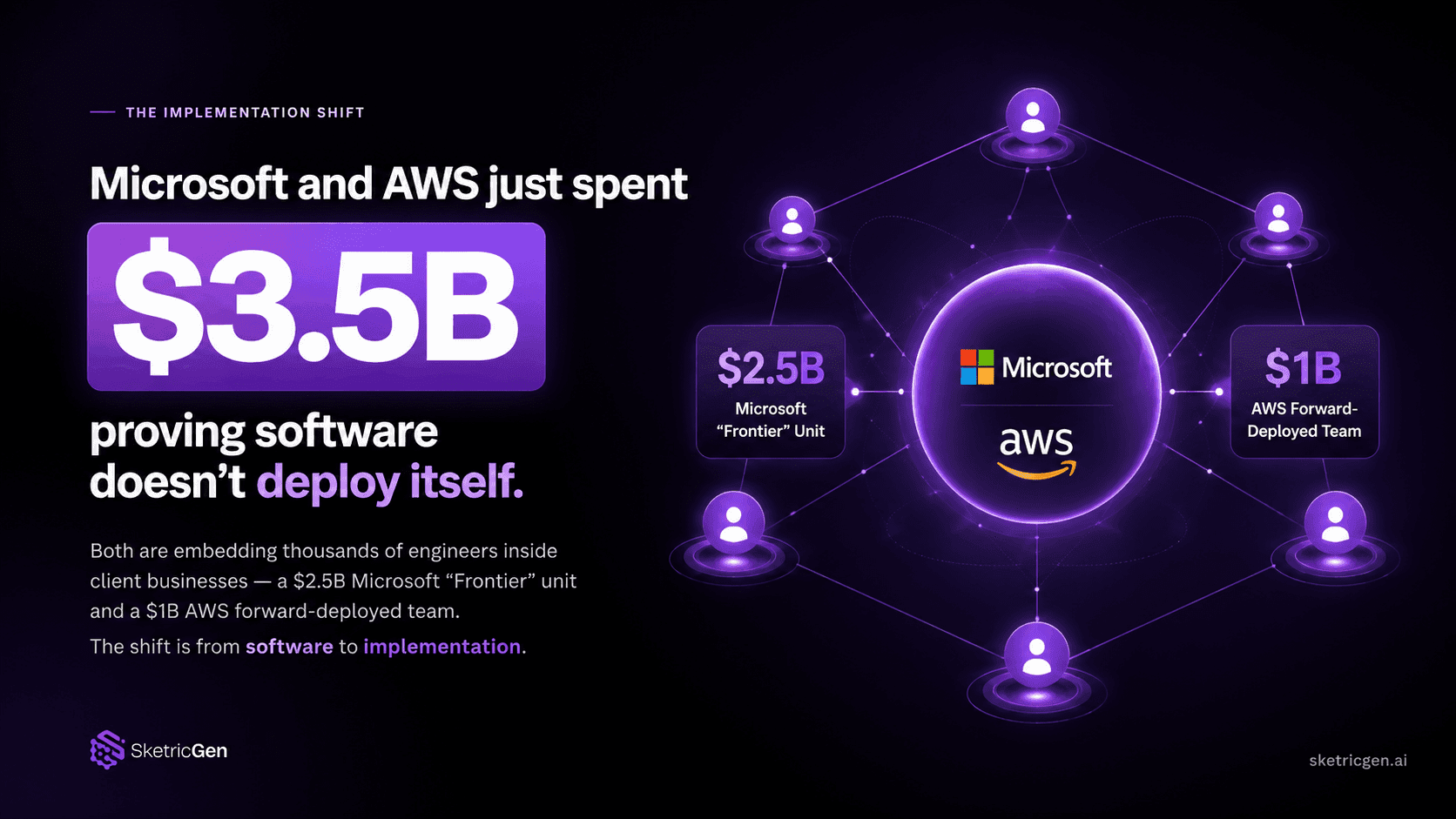
Microsoft and AWS Just Spent $3.5B Proving Software Doesn't Deploy Itself
ai agent news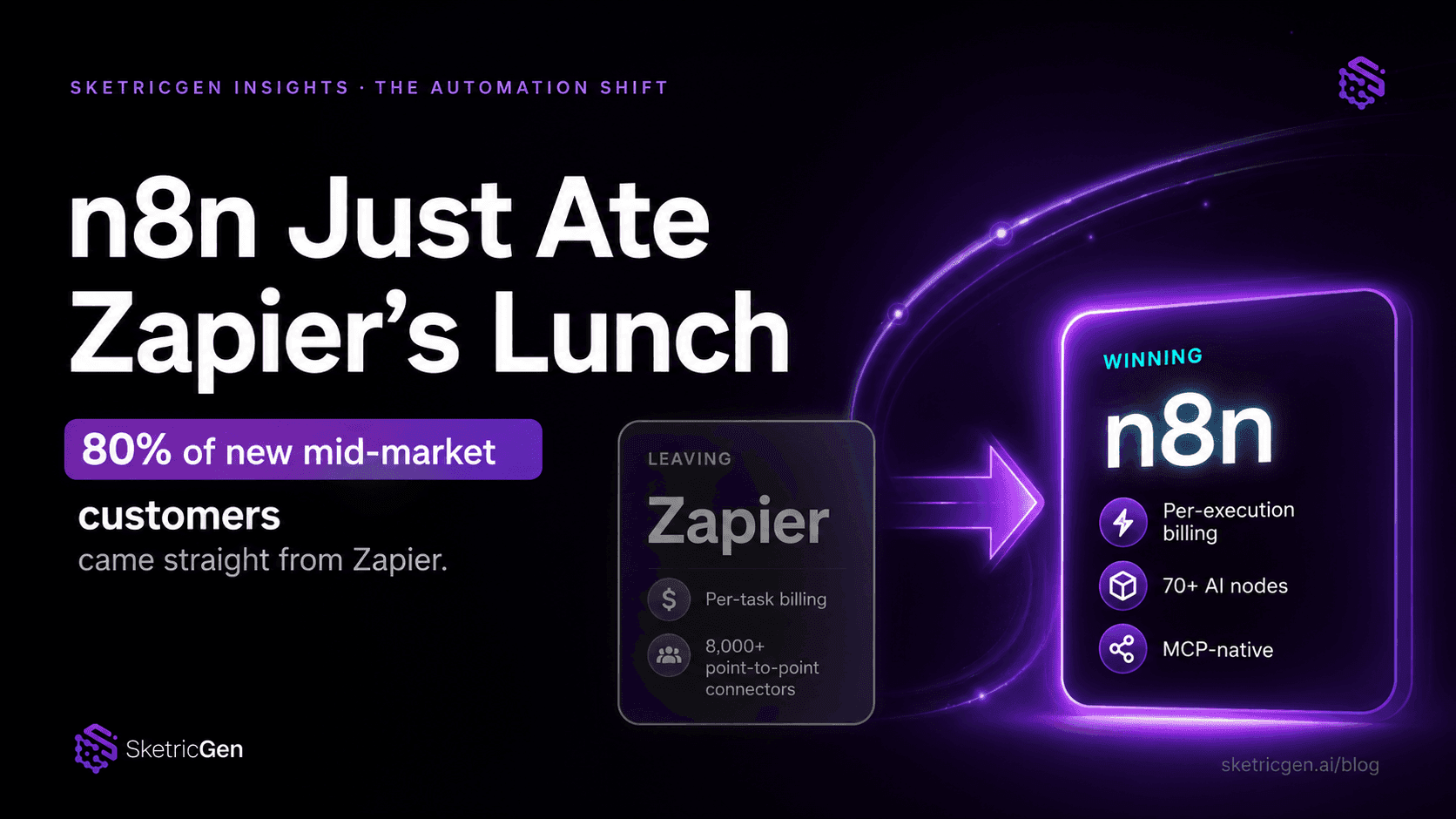
n8n Just Ate Zapier's Lunch: 80% of Its New Mid-Market Customers Were Already Paying for Zapier
ai agent news