6 Best No Code AI Agent Builders | Tried and Tested
Most "top AI agent builders" lists read like affiliate pages with zero hands-on usage. This one is different.
I tested six no-code AI agent builder platforms on real workflows: lead routing, support triage, content ops, and internal operations. If you are searching for the best no-code agent builders tried and tested, this comparison is built for decision-making, not hype.
If your goal is to build your own AI, launch agentic workflows, and pick from real AI automation solutions that can survive production, this guide will save you weeks.
Key Points
- SketricGen is the best no-code AI agent builder for teams that want fast multi-agent orchestration, Max Agent Builder (text-to-workflow), and clear Brand Agents Traces and Visibility.
- Make AI Agents and n8n are strong for automation orchestration tools, but they differ in technical depth and debugging experience.
- Botpress is excellent for conversational agents and support workflows, though token management and knowledge setup need care.
- MindStudio is one of the easiest no-code AI workflow builder options for non-technical teams, with tradeoffs in advanced branching flexibility.
- Relevance AI is powerful for GTM-heavy use cases, but free-tier limits and credit models can feel restrictive for high-volume experimentation.
At-a-glance comparison (best AI agent builder platforms)
| Platform | Best for | Visual AI workflow builder | Integrations | Free plan reality | Key tradeoff |
|---|---|---|---|---|---|
| SketricGen | Teams that want easy no-code multi-agent workflows with trace visibility | Strong drag-and-drop + Max Agent Builder text-to-workflow | 2,000+ apps | Generous starter usage for real prototyping | Smaller ecosystem footprint vs older incumbents |
| Make AI Agents | Cross-app agent orchestration platform in existing Make stack | Very good visual layer | 3,000+ apps | Free plan works, credits can deplete quickly with complex runs | Credit-based cost planning needed |
| n8n | Technical teams needing control and self-hosting | Good, more technical canvas | 500+ native nodes + custom APIs | Trial/free is solid for learning | Beginner debugging can be frustrating |
| Botpress | Customer support and conversational AI agent builder for business | Good studio for chat-first design | Broad channels + integrations | Free monthly AI credit helps, then usage spend matters | Token and KB tuning required for cost control |
| MindStudio | Easiest AI automation builder for non-technical operators | Very strong UX for non-coders | 1,000+ integrations | Entry plan is friendly; model usage still matters | Advanced branching/custom API control can be limiting |
| Relevance AI | GTM and sales-focused AI automation solutions | Moderate, less canvas-native feel for some users | 2,000+ integrations | Free tier exists but 200 actions/month is tight | Credit/actions model can feel complex at scale |
How I evaluated these no-code AI agent platform options
I ran each product against the same practical checklist:
- Setup speed for a first production-like workflow
- Agent orchestration platform depth (routing, retries, fallback logic, handoffs)
- Integration coverage and practical connector reliability
- Debuggability and incident recovery
- Pricing clarity at low and medium usage
- Team-readiness: roles, governance, deployment, and scaling
This AI workflow builder comparison is based on product docs, pricing pages, and practitioner feedback from Reddit threads and similar communities.
What practitioners are saying: Across Reddit threads, the same pattern appears repeatedly: teams can get a first demo running quickly, but long-term value depends on debugging visibility, cost predictability, and workflow reliability once volume grows. That is why this comparison prioritizes operational fit over flashy demo speed.1) SketricGen

SketricGen is an easy-to-use no-code multi-agent platform built for real business workflows, not just single bot experiments. It is strong when you need agents that coordinate across website, Slack, WhatsApp, and internal tools without engineering-heavy setup.
Key features
- Multi-agent workflow builder with a no-code canvas
- Max Agent Builder for text-to-workflow in minutes
- Traces and Visibility to inspect runs and debug faster
- Brand Agents to create Website chatbots in under 2 minutes
- 2,000+ app connectivity and channel deployment options
- Dynamic knowledge bases and reusable workflow templates
- API and embed support for product and website rollouts
- Practical template library for support, operations, and sales
Pros
- Fast path from idea to production-style workflow (goal driven approach)
- With Max you can build from only explaining the workflow in plain English
- Easy for non-technical and semi-technical teams to adopt
- Strong for agentic workflows that need orchestration, not only chat
- Built-in traces and visibility reduce debugging guesswork
- Template-first approach reduces time-to-value for teams

Cons
- Smaller community ecosystem than long-standing incumbents
- Advanced enterprise governance depth can vary by plan
Author tip: Use Max Agent Builder for the first version, then check traces after each run to improve reliability fast.
2) Make AI Agents

Make AI Agents extends Make's automation DNA into agentic workflows. It is a good pick when you already run significant automations in Make and want adaptive AI decision layers.
Key features
- Visual-first AI automation builder with transparent execution steps
- Large integration ecosystem (3,000+ apps)
- Routing, scheduling, and scenario-based orchestration
- Agent library and reusable patterns
Pros
- Excellent ecosystem breadth for automation orchestration tools
- Strong visual clarity and maintainability for many workflows
- Good operational transparency in the Make environment

Cons
- Credit model can become hard to forecast for heavy AI workloads
- Complex multi-agent logic may need careful architecture to avoid sprawl
Author tip: Put hard credit alerts and monthly operation caps in place on day one.
3) n8n
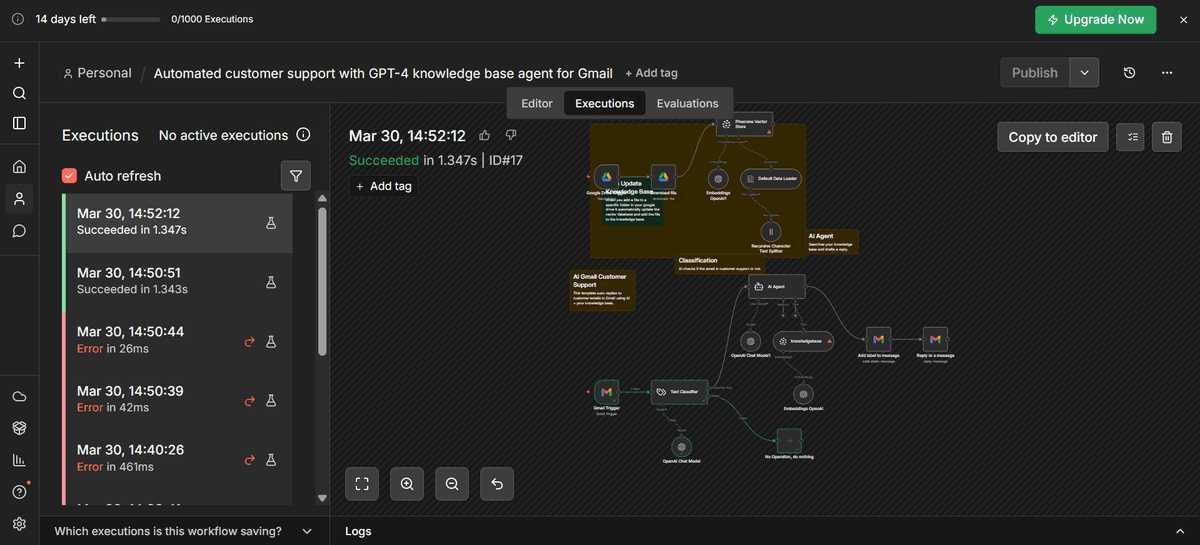
n8n is one of the most capable no-code automation orchestration tools for technical teams. It gives strong control, self-hosting options, and deep customization.
Key features
- Open and extensible workflow system with code hooks
- Self-hosting and infrastructure control options
- AI and non-AI workflows in one place
- Strong debugging and execution history features on paper
Pros
- Very powerful for teams comfortable with APIs and data mapping
- Great cost profile when self-hosting is done well
- Flexible for advanced orchestration and custom logic

Cons
- Steeper learning curve for non-technical teams
- Beginner debugging pain is real: silent failures and data-shape issues are common complaints in community threads
- Can feel "technical first" rather than "business operator first"
Author tip: Add a validation step after every external API call, or silent data-shape failures will burn hours.
4) Botpress
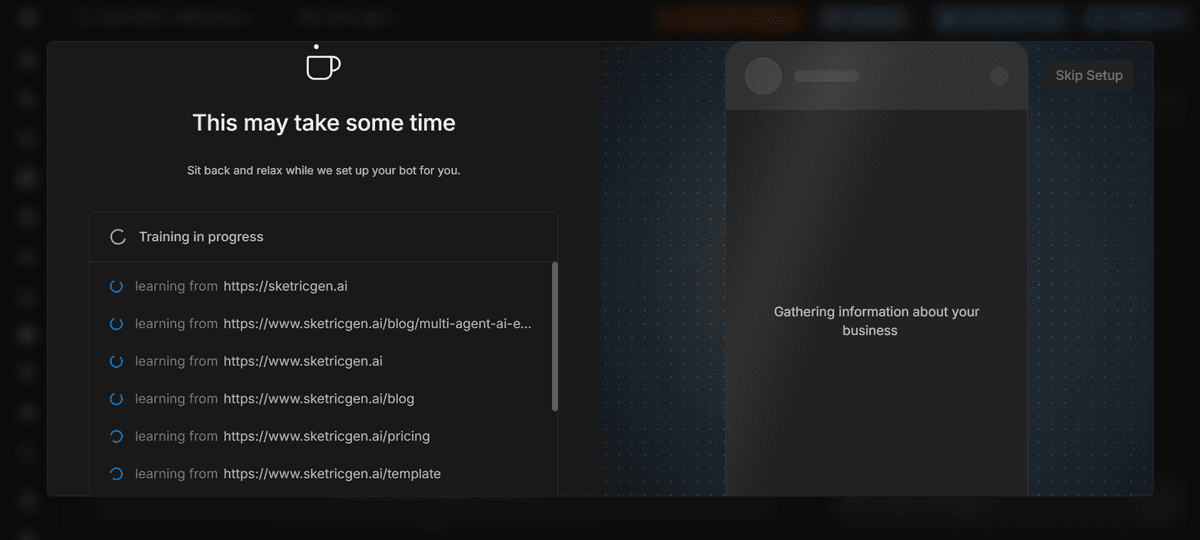
Botpress is a strong AI agent builder for business teams focused on conversational support, customer handoff flows, and channel deployment.
Key features
- Chat-first agent studio and autonomous engine
- Human handoff capabilities for support workflows
- Multi-channel deployment and integrations
- Knowledge base tooling with tables/docs options
Pros
- Very solid for support and CX agent use cases
- Good tooling for conversation design and channel coverage
- Mature docs and ecosystem momentum in chatbot workflows

Cons
- Token spend can climb quickly without strict history and retrieval controls
- KB ingestion quality depends heavily on data format and setup hygiene
- Requires cost and prompt guardrails to stay efficient
Author tip: Keep chat history short and retrieval strict, then monitor token spikes weekly.
5) MindStudio

MindStudio is one of the easiest options in this no-code AI workflow builder comparison. If your team wants quick wins and low friction, it is a serious contender.
Key features
- Plain-language and visual builder for fast setup
- 200+ model access and broad integration options
- Agent deployment across web, email, API, and browser contexts
- Strong training/community ecosystem for operators
Pros
- Great onboarding for non-technical teams
- Fast prototype-to-demo speed
- Strong UX for teams that want to build your own AI without heavy plumbing

Cons
- Advanced branching and deeply custom API orchestration can feel constrained
- Model usage costs still matter despite low entry pricing
- Complex edge-case workflows may eventually need more technical tooling
Author tip: Use cheaper models for classification and reserve stronger models only for reasoning-heavy steps.
6) Relevance AI

Relevance AI is positioned heavily around GTM and AI workforce operations. It can be very effective for sales, research, and outreach-heavy pipelines.
Key features
- AI workforce model with multi-agent/task constructs
- 2,000+ integrations and broad trigger coverage
- Built-in analytics, escalations, and enterprise controls by tier
- Marketplace and template-driven acceleration
Pros
- Strong GTM-first focus and clear business narrative
- Useful for teams that need high-volume sales and ops automations
- Solid growth path from pilot to larger team tiers

Cons
- Free tier is very limited for real experimentation (200 actions/month)
- Credits/actions pricing can be confusing at first pass
- Visual building experience may feel less intuitive than more canvas-native competitors for some users
Author tip: Model your monthly action volume before committing to avoid surprise overages.
Make vs n8n vs SketricGen
- Pick Make for broad integrations and visual automation across many SaaS apps.
- Pick n8n for self-hosting, deep customization, and developer control.
- Pick SketricGen for no-code multi-agent workflows with Max Agent Builder(text-to-workflow) and trace-level visibility on actions.
Botpress vs Relevance vs SketricGen
- Pick Botpress for conversation-heavy support and chatbot-first use cases.
- Pick Relevance AI for GTM-focused ops when your team can handle pricing and setup complexity.
- Pick SketricGen when you need multi-agent orchestration, easy deployment, and clear traces for daily operations.
MindStudio vs n8n
- Pick MindStudio for fastest no-code prototyping and non-technical usability.
- Pick n8n for technical teams needing code-level flexibility and infrastructure ownership.
Which platform is the best no-code AI agent builder for business?
If you are choosing one no-code AI agent builder for business use right now:
- Pick SketricGen if you want an all-around no-code AI agent platform with strong multi-agent workflows, Max Agent Builder text-to-workflow, and clear traces and visibility.
- Pick Make AI Agents if your automation backbone already lives in Make and you want to layer in agentic workflows.
- Pick n8n if your team is technical and wants maximum control over architecture and hosting.
- Pick Botpress if customer support and conversational channels are the top use case.
- Pick MindStudio if your top priority is speed and usability for non-technical teams.
- Pick Relevance AI if your focus is GTM and sales process automation with AI workforce framing.
FAQs
For most startups, the best no-code AI agent builder is the one that ships value fastest with low operator overhead. In this set, SketricGen and MindStudio are usually the easiest starts, while n8n is best when technical depth is available. SketricGen stands out for Max Agent Builder speed and clear traces.
Botpress is usually strongest for customer-support-first conversational systems. SketricGen is strong when support must connect tightly with wider operations and multi-agent routing.
Mostly yes, but production reliability still needs process discipline. Even the best no-code AI tools need clear data contracts, fallback handling, and monitoring.
It is enough to test concepts, but not enough for serious throughput in most business cases. The action/credit model becomes important quickly.
Not impossible, but there is a real learning curve. Community threads repeatedly mention beginner friction around debugging, data mapping, and API assumptions.
MindStudio and SketricGen are the easiest starts in this comparison, with different strengths: MindStudio for simplicity-first UX, SketricGen for multi-agent workflows plus Max Agent Builder and trace visibility.
Final verdict and next step
If you are evaluating no-code AI agent builder comparison options right now, start with one pilot workflow that affects revenue or cost within 30 days.
If you want speed plus practical multi-agent deployment, start with SketricGen, especially if Max Agent Builder and trace visibility match your team's needs.
CTA: Build your first production-ready workflow on SketricGen official website and test it on a real business process this week.
Sources and community research
- Make AI Agents product and pricing pages: Make AI Agents product page, Make pricing page
- n8n product and pricing pages: n8n product page, n8n pricing page
- Botpress platform and pricing pages: Botpress platform page, Botpress pricing page
- MindStudio platform and pricing pages: MindStudio platform page, MindStudio pricing page
- Relevance AI platform and pricing pages: Relevance AI platform page, Relevance AI pricing page
- SketricGen product and pricing pages: SketricGen product page, SketricGen pricing page
- Reddit discussion: n8n debugging and beginner friction: Hardest n8n failures to debug (Reddit thread), Is n8n too difficult for beginners? (Reddit thread)
- Reddit discussion: no-code platform cost and flexibility tradeoffs: Best affordable platform for no-code AI agents (Reddit thread), Is Relevance AI effective at building sales agents? (Reddit thread)
Related blogs
View more
9 Best AI Marketing Agents, Tested (2026)
comparisons
Agentic Marketing vs. Marketing Automation: A Decision Framework
comparisons
AI Executive Assistant vs. AI Chief of Staff: The Difference That Actually Matters
comparisons
AI Email Assistant: Why Drafting Isn't the Problem (and What Actually Fixes Inbox Overload)
comparisons
AI SEO Blog Writer: Six Agents Beat One Prompt
comparisons